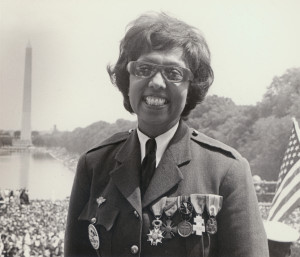
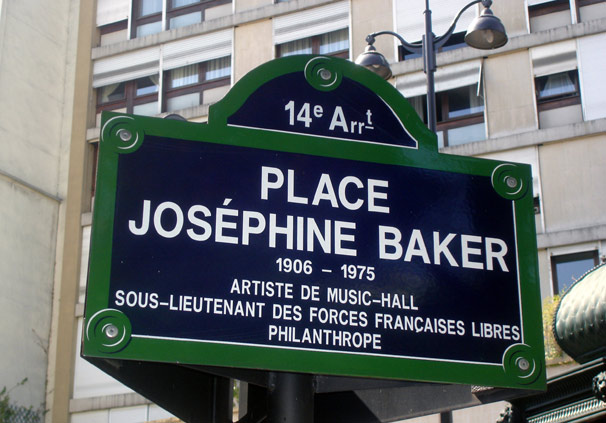
Josephine, wearing her French Resistance uniform and her medals from her service in WW2.
On this 50th Anniversary of The March on Washington,
we thought we would share the text of Josephine’s speech from this memorable day.
Here it is, in its entirety:
“Friends and family…you know I have lived a long time and I have come a long way. And you must know now that what I did, I did originally for myself. Then later, as these things began happening to me, I wondered if they were happening to you, and then I knew they must be. And I knew that you had no way to defend yourselves, as I had.
And as I continued to do the things I did, and to say the things I said, they began to beat me. Not beat me, mind you, with a club—but you know, I have seen that done too—but they beat me with their pens, with their writings. And friends, that is much worse.
When I was a child and they burned me out of my home, I was frightened and I ran away. Eventually I ran far away. It was to a place called France. Many of you have been there, and many have not. But I must tell you, ladies and gentlemen, in that country I never feared. It was like a fairyland place.
And I need not tell you that wonderful things happened to me there. Now I know that all you children don’t know who Josephine Baker is, but you ask Grandma and Grandpa and they will tell you. You know what they will say, “Why, she was a devil.” And you know something…why, they are right. I was too. I was a devil in other countries, and I was a little devil in America, too.
Devillment ran in her very blood. 🙂
But I must tell you, when I was young in Paris, strange things happened to me. And these things had never happened to me before. When I left St. Louis a long time ago, the conductor directed me to the last car. And you all know what that means.
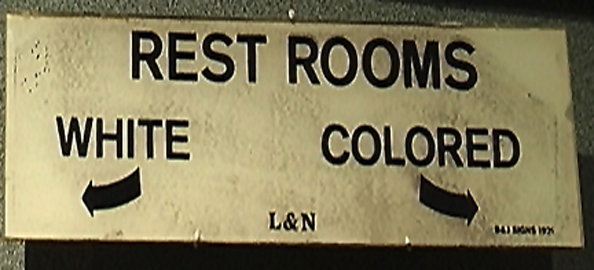
But when I ran away, yes, when I ran away to another country, I didn’t have to do that. I could go into any restaurant I wanted to, and I could drink water anyplace I wanted to, and I didn’t have to go to a colored toilet either, and I have to tell you it was nice, and I got used to it, and I liked it, and I wasn’t afraid anymore that someone would shout at me and say, “Nigger, go to the end of the line.” But you know, I rarely ever used that word. You also know that it has been shouted at me many times.
Jim Crow sign.
So over there, far away, I was happy, and because I was happy I had some success, and you know that too.
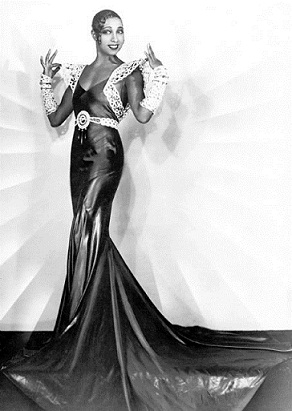
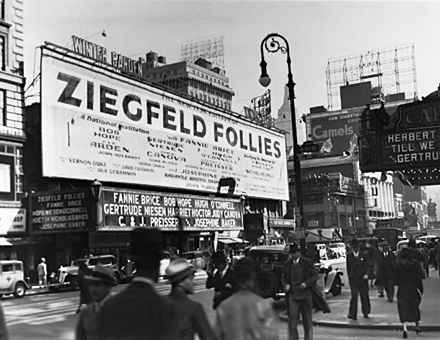
Then after a long time, I came to America to be in a great show for Mr. Ziegfeld, and you know Josephine was happy. You know that. Because I wanted to tell everyone in my country about myself. I wanted to let everyone know that I made good, and you know, too, that that is only natural.
Josephine’s show at the Follies (see lower right)
But on that great big beautiful ship, I had a bad experience. A very important star was to sit with me for dinner, and at the last moment I discovered she didn’t want to eat with a colored woman. I can tell you it was some blow.
And I won’t bother to mention her name, because it is not important, and anyway, now she is dead.
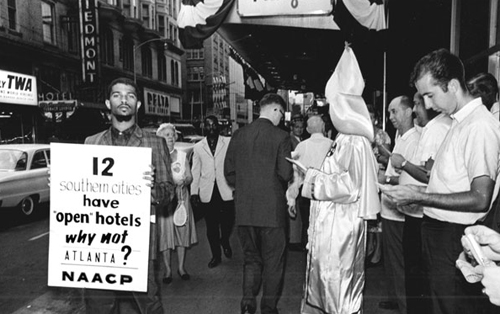
And when I got to New York way back then, I had other blows—when they would not let me check into the good hotels because I was colored, or eat in certain restaurants. And then I went to Atlanta, and it was a horror to me. And I said to myself, My God, I am Josephine, and if they do this to me, what do they do to the other people in America?
Josephine fought against hotel discrimination.
You know, friends, that I do not lie to you when I tell you I have walked into the palaces of kings and queens and into the houses of presidents. And much more. But I could not walk into a hotel in America and get a cup of coffee, and that made me mad. And when I get mad, you know that I open my big mouth. And then look out, ‘cause when Josephine opens her mouth, they hear it all over the world.
So I did open my mouth, and you know I did scream, and when I demanded what I was supposed to have and what I was entitled to, they still would not give it to me.
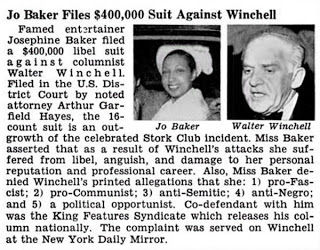
So then they thought they could smear me, and the best way to do that was to call me a communist. And you know, too, what that meant. Those were dreaded words in those days, and I want to tell you also that I was hounded by the government agencies in America, and there was never one ounce of proof that I was a communist. But they were mad. They were mad because I told the truth. And the truth was that all I wanted was a cup of coffee. But I wanted that cup of coffee where I wanted to drink it, and I had the money to pay for it, so why shouldn’t I have it where I wanted it?
Newspaper article of Josephine’s libel suit against gossip columnist Walter Winchell.
Friends and brothers and sisters, that is how it went. And when I screamed loud enough, they started to open that door just a little bit, and we all started to be able to squeeze through it. Not just the colored people, but the others as well, the other minorities too, the Orientals, and the Mexicans, and the Indians, both those here in the United States and those from India.
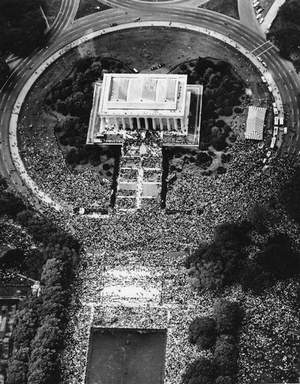
Now I am not going to stand in front of all of you today and take credit for what is happening now. I cannot do that. But I want to take credit for telling you how to do the same thing, and when you scream, friends, I know you will be heard. And you will be heard now.
Aerial view of The March on Washington, August 28th, 1963.
But you young people must do one thing, and I know you have heard this story a thousand times from your mothers and fathers, like I did from my mama. I didn’t take her advice. But I accomplished the same in another fashion. You must get an education. You must go to school, and you must learn to protect yourself. And you must learn to protect yourself with the pen, and not the gun. Then you can answer them, and I can tell you—and I don’t want to sound corny—but friends, the pen really is mightier than the sword.
I am not a young woman now, friends. My life is behind me. There is not too much fire burning inside me. And before it goes out, I want you to use what is left to light that fire in you. So that you can carry on, and so that you can do those things that I have done. Then, when my fires have burned out, and I go where we all go someday, I can be happy.
You know I have always taken the rocky path. I never took the easy one, but as I get older, and as I knew I had the power and the strength, I took that rocky path, and I tried to smooth it out a little. I wanted to make it easier for you. I want you to have a chance at what I had. But I do not want you to have to run away to get it. And mothers and fathers, if it is too late for you, think of your children. Make it safe here so they do mot have to run away, for I want for you and your children what I had.
Ladies and gentlemen, my friends and family, I have just been handed a little note, as you probably say. It is an invitation to visit the President of the United States in his home, the White House.
I am greatly honored. But I must tell you that a colored woman—or, as you say it here in America, a black woman—is not going there. It is a woman. It is Josephine Baker.
This is a great honor for me. Someday I want you children out there to have that great honor, too. And we know that that time is not someday. We know that that time is now.
I thank you, and may God bless you. And may He continue to bless you long after I am gone.”
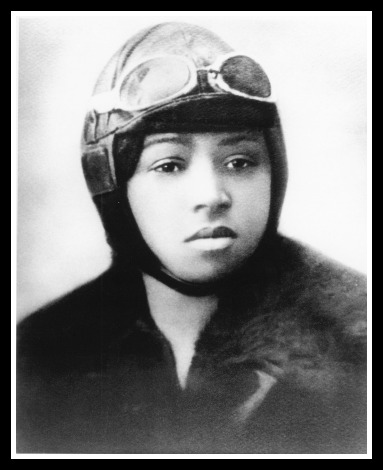
Amelia Earhart wasn’t the only American woman who soared into aviation history as she took her dreams to the sky. Bessie Coleman not only set aviation records of her own, but the story of her ascent above racial and gender barriers makes her a woman worthy of a long chat.
Bessie Coleman was born January 26, 1892 in Atlanta, Texas, the 10th child of George and Susan Coleman, both sharecroppers. George was part American Indian and proud of his ancestry but pride doesn’t put food on the table, does it? George and Susan scraped together enough money for a small plot and settled the family in Waxahachie, Texas. As the more elder of the Coleman children to survive childhood grew and moved out of the home, life never got easy for Bessie. We talk about Bessie’s childhood in the podcast, the slow path to an education that she had due to time away from school because of cotton harvest, the chores and responsibilities that she had and the impact of her father leaving the family for a life he thought would be more accepting of him in Oklahoma.
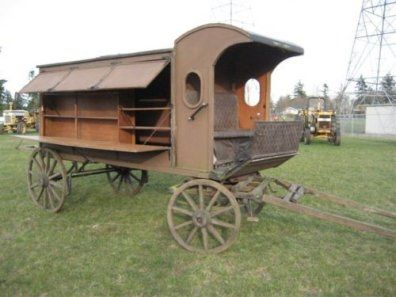
A bookwagon, circa 1920 (courtesy libraryhistorybuff.com)
Susan wanted her children educated and helped encouraged them to make that happen as best she could. Once Bessie completed the eight grades available to her, she helped save and eventually registered at college.
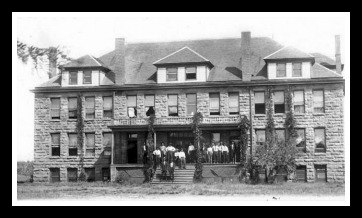
Colored Agricultural and Normal University in Langston, Oklahoma (now simply Langston University...go Lions)
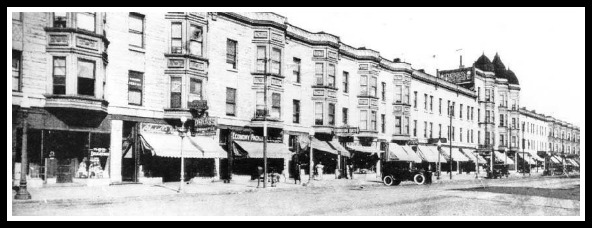
Unfortunately her money ran out after only one semester and headed back to Waxahachie to work as a laundress for several years. But Bessie wanted more out of life and moved to Chicago to live with two of her older brothers. The bright lights and big promises of the city didn’t prove all that more life advancing than they did in Waxahachie- laundress? Again? Bessie saw her opening and enrolled in Burnham School of beauty and Culture where she quickly trained to be a manicurist. Badda bing, Bessie is working in a barber shop on the see and be seen area known as The Stroll.
State Street early 1900's (courtesy nps)
When her brother John came back from World War I, he bragged about the amazing French women and teased Bessie that no African American woman could fly like a French woman.
With Wipe That Grin Off Your Face determination, Bessie set out to prove her brother wrong. (Such a strong motivator, isn’t it?) She had been bitten by the aviation bug while in Chicago, but she could not find any flight schools that would enroll her. Being both a woman and black was a double whammy.
So, she wants to fly.
She wants to show her brother that French women aren’t the only ones who can fly.
She does the most logical thing: she goes to France to learn to fly.
So it wasn’t quite that easy, and we cover so much more in the podcast but essentially that’s exactly what she does! (And does it a lot faster than Amelia even though they began taking lessons at about the same time.)
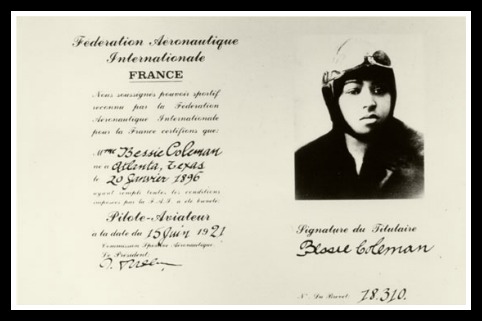
Bessie Coleman- the first black woman in the world to earn one of these! Pilot's license
When Bessie returned to the US with her shiny new license and aviatrix skills ( and no plane of her own) she set off on the air show circuit. While she was skilled, mechanical error led to a crash. Barely alive with bones broken and injuries that kept her sidelined,she insisted that she would fly again.
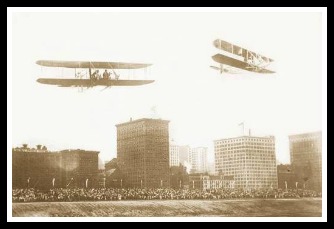
Early 1900's airshow over Grant Park in Chicago (courtesy chuckmanchicagonostalgia.wordpress.com)
Of course she did! But she still didn’t have a plane of her own. What she did have was a dream. Bessie Coleman wanted to help desegregate aviation. Wherever she toured she refused to fly if blacks were not allowed into the show, and she held tight to a dream of opening her own flight school. Traveling the country on borrowed planes she fundraised- speaking and creating ever more elaborate and patriotic shows she was a big draw for air shows.
On April 30, 1926 Bessie and a mechanic were test flying a plane. As part of her performance Bessie parachuted off the plane, and the two were scouting a location. Bessie, so that she could see over the edge for a perfect landing spot, was not wearing her seatbelt. At 3,000 feet up, the plane went into a nose dive and Bessie fell to her death. She was 33 years old.
In 1929 the Bessie Coleman Aero Club , a flight school named in her honor opened in Los Angeles.
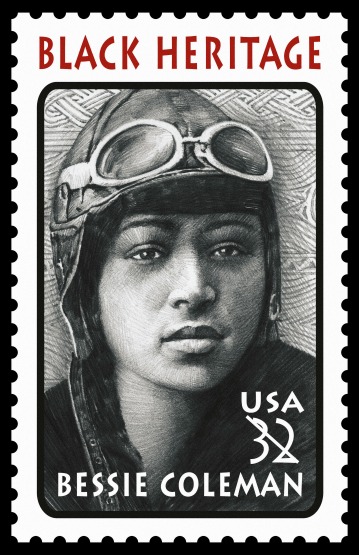
Bessie Coleman on a US postage stamp, 1995
TIME TRAVEL WITH THE HISTORY CHICKS
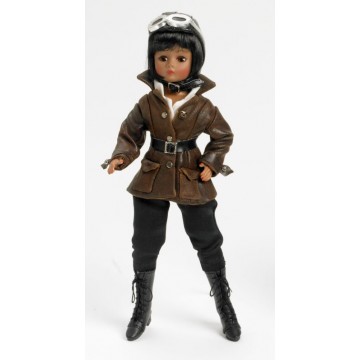
How did we miss this website? Get all your historical women gear (designed for kids but adult sizes available, too) A Mighty Girl. Maybe not exactly this doll though, unless that’s your thing, then here it is! You were looking for this!
Bessie Coleman Madam Alexander doll
Do not go here hungry! You were warned. The history of chili (and more…oh, so much more) What’s Cooking America
We know you are looking for this, all you runners, Marathon Du Medoc (Bordeaux Marathon). And here is a fun article about running it , good even if there is no chance of you ever attempting such an event! Food and Wine
Books! We only had a couple that we would recommend:
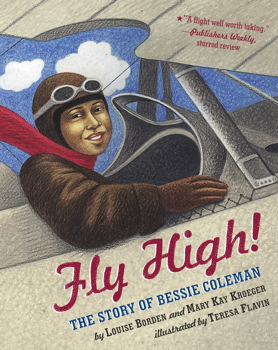
Fly High! by Louise Borden and Mary Kay Kroeger, Illustrated by Teresa Flavin
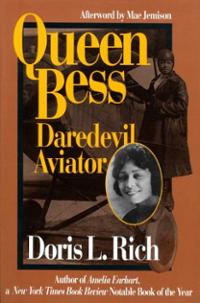
Queen Bess: Daredevil Aviator by Doris L. Rich
While surfing…er, following a lead we stumbled across this blog that has very little to do with Bessie Coleman (other than this post about an entry from her beauty school primer) but thought it too interesting to not add here: Bobby Pin Blog Vintage make-up and beauty instructions, anyone?
Our music is courtesy of Musicalley. Visit them at Music.mevio.com
Show outro music : “Dreamers” by The Hipstones
One of the best parts of our gig as History Chicks is getting to meet people through the podcast, website and social media pages. We met on a message board, so making friends online is nothing new to either of us, and it’s pretty sweet to be in a position to meet others with interests similar to our own.
Through the course of exchanged emails and private messages we have discovered that some of you are doing some really cool historically based projects or businesses that we admire. We thought that it would be fun to show them off. Some of the projects that we will share are focused on historical women and some will simply deal with anything in the past- but they are all run by listeners. This first one is both about women and the past ( and it, in a turn-your-head-and-squint way, ties in with a promise that we made a few months ago, so we will fulfill that now).
First up- let’s take a look at at topic that is near and dear to our hearts: historical fashion.
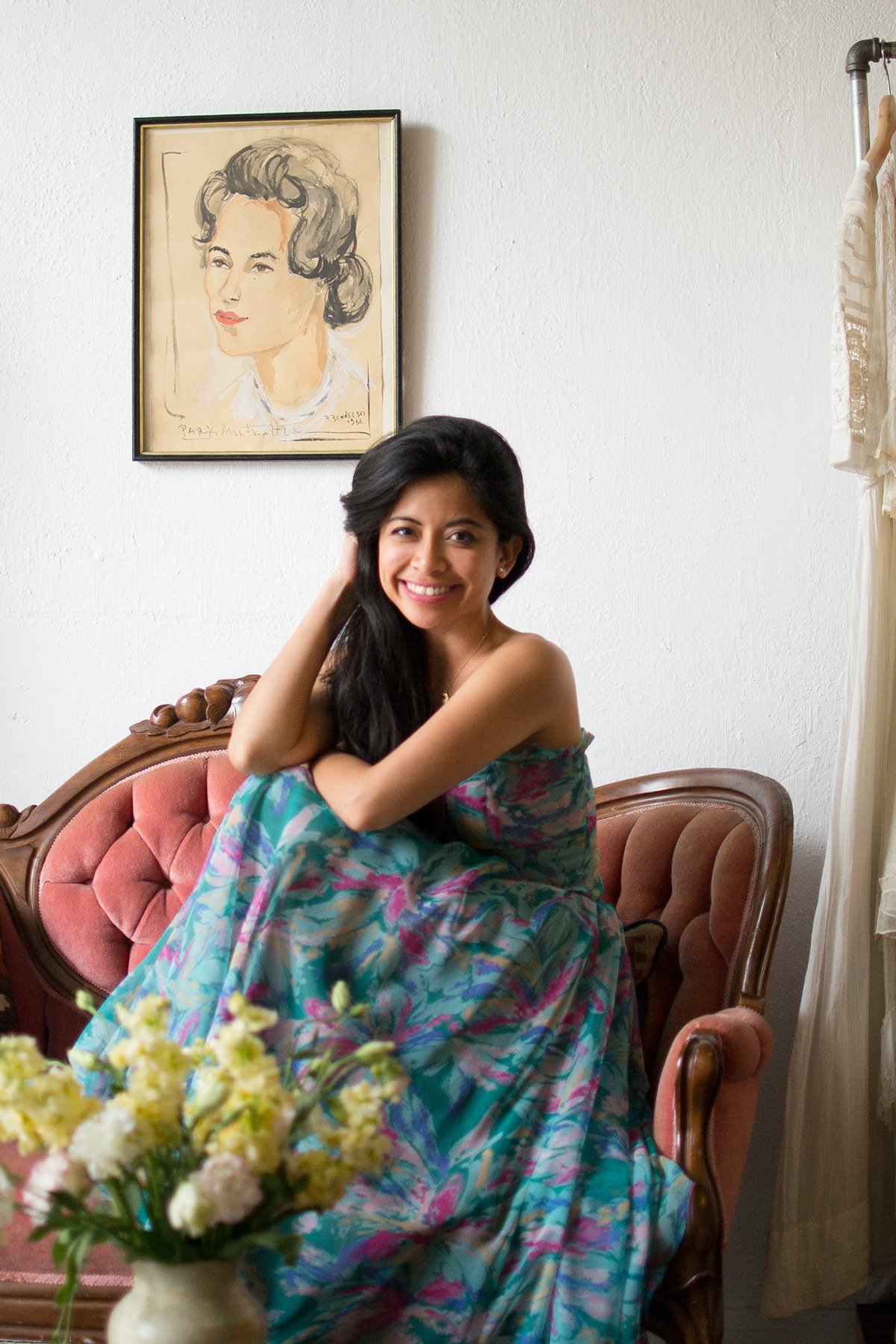
“A deep love for fashion and history bore the idea of ADORED VINTAGE, an online vintage clothing boutique for modern women that love fanciful and pretty things. Each vintage garment is hand selected for quality, beauty, and relevance to modern day fashion. We believe each garment bears a tale from its past and the women that chooses a vintage garment from our shop loves the idea of adding her own chapter to the story of a dress.”
Not only does she select beautiful garments and accessories ( both true vintage and inspired by) but the photography is, quite simply- lovely.
Some dresses from her shop
1950s emerald green halter dress
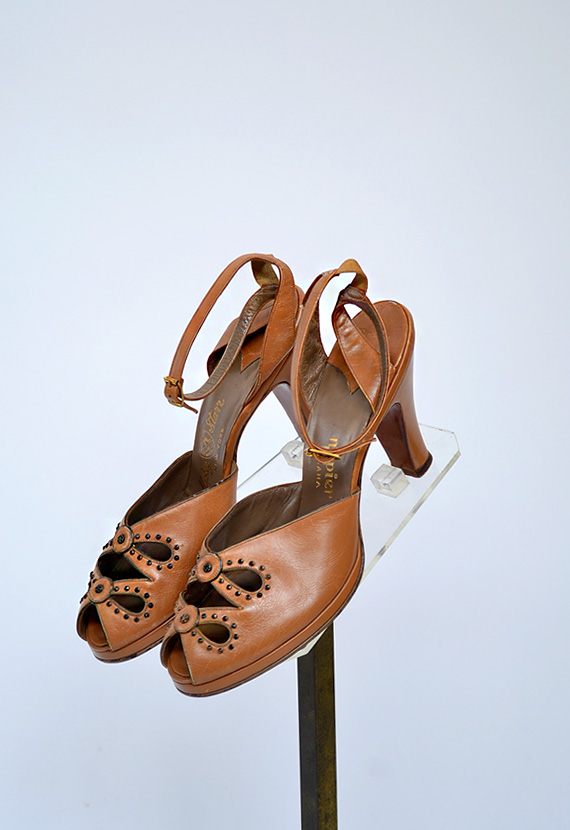
She carries accessories like these 1940s studded strap heels...
...and purses like this 1950s clutch...
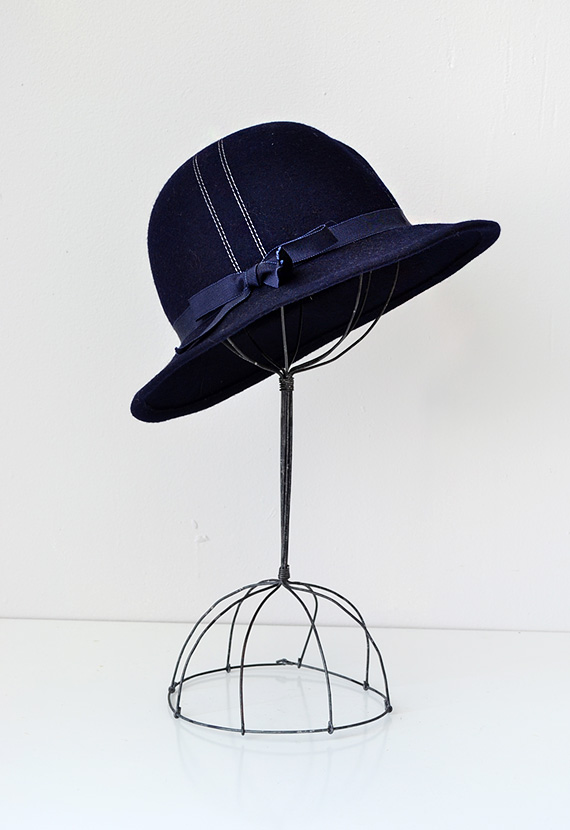
...and hats!
But the dresses! Oh! The dresses!
Her showroom as photographed by Connie Lyu Photography
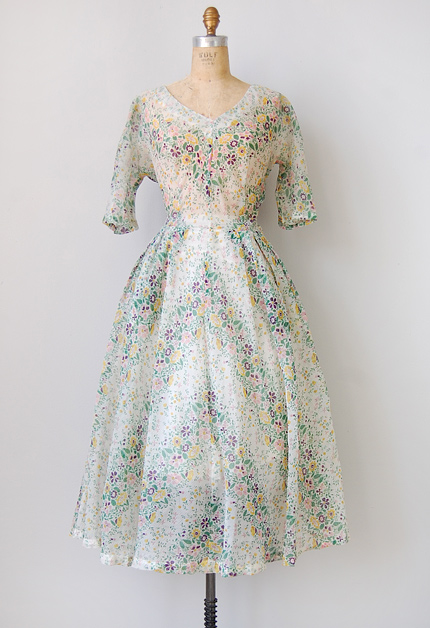
50's Floral
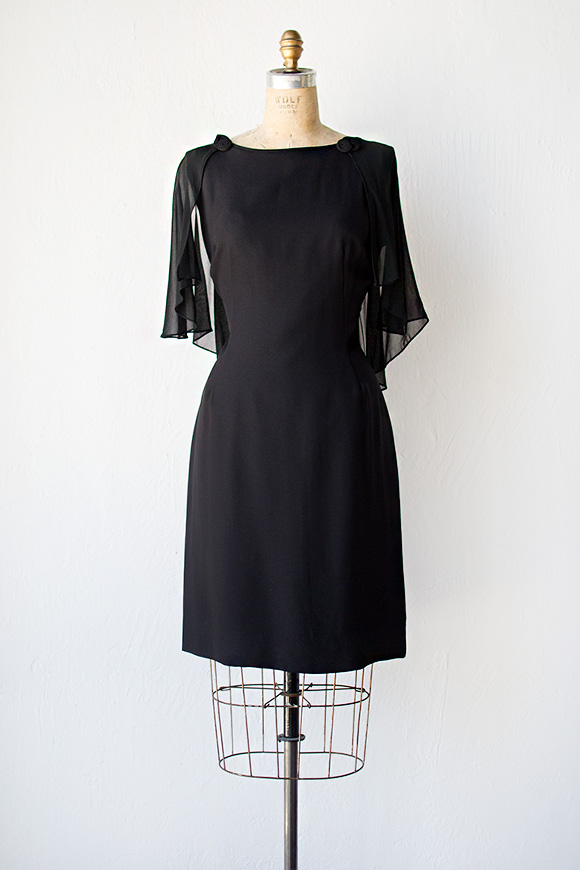
'60s little black dress
Her brick and mortar showroom is in downtown Long Beach, California, but we follow the beautiful vintage fashion show via her facebook page and website where you can fill your cart with beautiful pieces and have them delivered. If you are fortunate enough to be nearby, the showroom is open by appointment only or check out her once-a-month Vintage Sunday on the third Sunday of the month- it coincides with the Long Beach Flea Market (as if vintage fashion, and the beach wasn’t enough to draw you in).
We’ve been talking women in history with Rodellee for a bit and we can’t help but notice her History Chickness show through in some collection and garment titles. Each item has a clever title and recently she named a collection of garments in honor of Jane Austen. Of course, her one-of-a-kind items aren’t on the Adored Vintage site for long, so going back frequently to see what she has added that is new and available is such a hardship. (yeah…not really.)
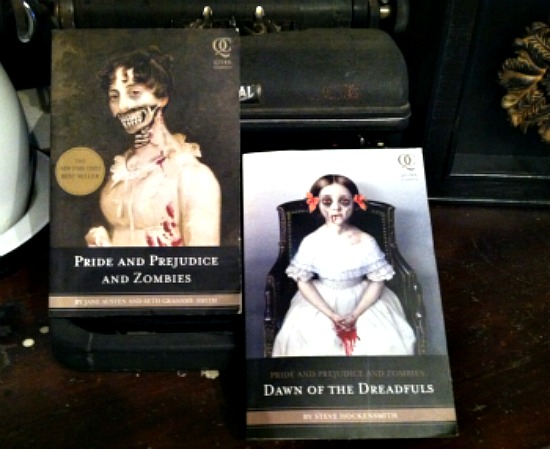
AND (turn your head and squint now) speaking of Jane Austen and things formerly loved by others : we had promised to give away a couple of Beckett’s loved (read:used) copies of the parody novels Pride and Prejudice and Zombies (by Jane Austen and Seth Graham-Smith) and Pride and Prejudice and Zombies: Dawn of the Dreadful ( by Steve Hockensmith). Just leave a comment on this post (using an email that we can contact you through) telling us WHO IS YOUR FAVORITE JANE AUSTEN HEROINE and you will be entered into a random drawing (both books, one winner) held on August 17th, 2013.
Beckett's books can be yours! Well, these two anyway. Just leave a comment on this post telling us who your favorite Jane Austen heroine is. Random drawing 8/17/13
We will share more friends’ projects whenever the whim strikes us, but keep an eye out because- just like our ever growing and amazing list of historical women that we would like to discuss- we have a list for this, too!
A year and a half ago we sat down to talk about Margaret Beaufort and Elizabeth Woodville. Since then a lot of you have joined us…and a lot of you are really excited about the television show The White Queen, which is based on the novel series THE COUSINS’ WAR, by Philippa Gregory. So are we! (So excited) (So very excited) Here in the good ol’ US of A the show begins on the Starz network on August 10th, 8 PM ET/PT, so we thought that this was a good time to brush up on the stories of the women who would become grandmothers to our favorite bad guy, Henry VIII.
Because we posted portraits on our original shownotes, we thought that getting the faces of the actresses playing the parts into our heads would be a good idea.
Elizabeth Woodville, played by Rebecca Ferguson ( Courtesy Starz)Margaret Beaufort, played by Amanda Hale (Courtesy Starz)
Starz has a very slick website (facebook page and twitter) for this show which makes talking about it with other fans really easy. The shownotes from the original episode, including book recommendations, from our original posting are here: SHOWNOTES.
And if you are in the UK, you can watch entire episodes online here: BBC ONE
Born in Kansas, a little girl grew to become an aviatrix whose name is still known around the world over 75 years after her mysterious death. While so many focus on her disappearance, we spent our time spotlighting the life of Amelia Earhart, a life that has inspired generations of little girls to let their dreams soar.
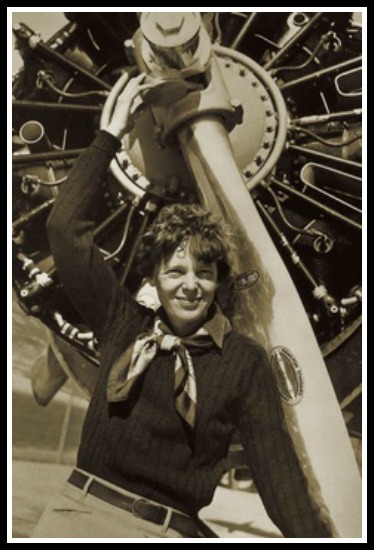
Amelia, rocking the flight gear
Amelia Earhart was born July 24, 1897 to Edwin and Amy Earhart in Atchison, Kansas, the eldest of their two daughters.
She spent a great deal of her childhood in Atchison at the home of her wealthy grandparents. Her parents lived down the Missouri River in Kansas City with Amelia’s sister Muriel. Of course we talk about their courtship, marriage and life as a family like we do with a lot of our subjects. And, like a lot of our subjects, young Amelia was a bit of a tomboy and another leader of her baby gang. Oh sure, we tell stories. Lots of stories.
Amelia’s childhood took a turn when Papa was relocated with the railroad to Des Moines, Iowa, and it was in Iowa that Amelia saw her first airplane- but a desire to fly would come much later. First the family had to bounce around a bit. Edwin wasn’t the wisest of financial men, and took to drinking. The combination of the two resulted in job losses and steps down the ladder of success. Amy, who never had to scrimp or save in her life was at a loss and followed him from city to city- until she couldn’t do it any more. She took Amelia and Muriel to Chicago to stay with friends and Amelia who was struggling socially didn’t fare so well.
The family did, eventually (and we tell you the whole story) reunite, they had a slight financial windfall and Edwin did get his act together. Amelia got sent off to finishing school in Pennsylvania and Muriel to Toronto. Amelia perked up a bit- she played sports, got good grades, spoke up against injustice…and over Christmas break she visited her sister.
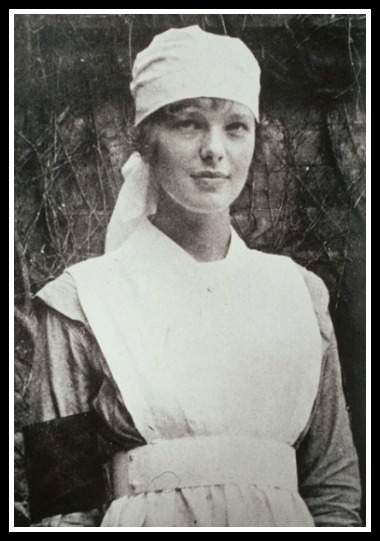
While in Toronto she was exposed to soldiers coming back from WWI. She felt led to help out in some manner and wanted to stay, but her mother convinced her to go back to school. Which she did. For a few months but the pull was too strong and she was soon working as a nurse in a military hospital. It was here where some Royal Canadian Air Force pilots took her to an airfield and she was finally bitten by the flying bug.
Amelia as a nurse in Toronto circa 1917
Unfortunately, not too long afterward she was also bitten by the Spanish flu and sent back to the US, this time to Massachusetts where Muriel was preparing for college entrance exams. We cover this period of Amelia’s life in the podcast, her many starts and stops not only as a pilot but in other pursuits and in her education finally landing in California with her parents at the age of 22. Here she took the first paying job of her life, saved her money and paid for as many flying lessons, and time in planes as she could. Within a year she was flying her own plane and beginning to set aviation records. She assimilated herself into the aviation subculture in a big way- girl looked gooood! Long pants, high boots, leather coat (customized by sleeping in it) and sloooowly she began to cut her long tresses to the shorter style that we know- flyer hair.
But just because she was finally flying, her life wasn’t all perfect. Amy and Edwin eventually divorced, sinus problems plagued her and and a move back East seemed the perfect solution for the Earhart women. (Listen to the podcast, it will all make sense). Life back on the East coast was rougher than on the West. More starts and stops were in Amelia’s life- college, no college; teaching, no teaching…Amelia burned through life plans faster than a commercial for mail order degrees: nurse companion, social worker and finally a full time position working with children in Denison House- a settlement that aided new immigrants in becoming citizens. Finally with money in her pocket again, Amelia was able to take to the skies in her free time.
In 1927 Charles Lindbergh made the first solo non-stop flight across the Atlantic, five years later- Amelia was given the same opportunity as the commander of a plane. Oh sure, she saw herself as a passenger, but she did it and as soon as her feet hit European soil- her life was changed- she was the face of female aviation. Hello, Aviatrix!
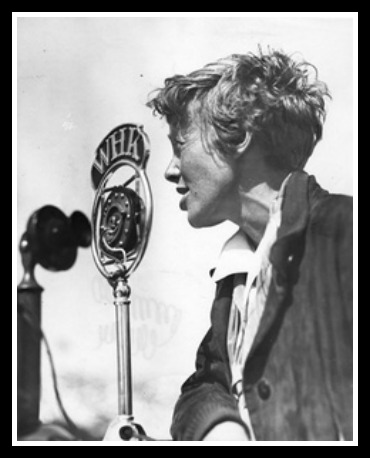
Amelia becomes the spokesperson for female aviation
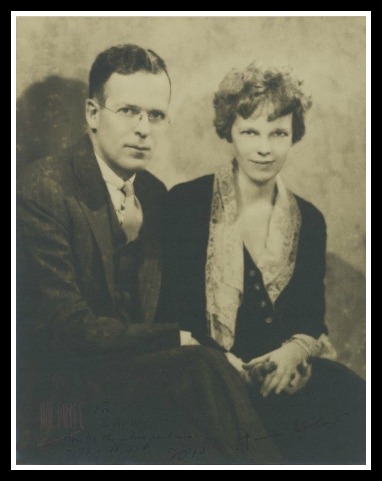
Not only was Amelia launched into the public spotlight, she was launched there by the man who would become her husband- George Putnam. Ok, so he was married but that was a detail that could be overcome to the satisfaction of all parties involved. They were wed and began a business/personal partnership that would last ’til the end of her life (oh, you know we love a good wedding story, and Amelia and George had one- listen to the podcast!).
Mr. and Mrs. George Putnam
Putnam was a master at publicity. His skill and experience and Amelia’s interest in bringing aviation to women (as well as logging as much flight time as she could) combined to be a powerful package. She writes a couple books, sets record after record, lectures, organizes a cross-country air derby and a female aviators organization, writes for Cosmopolitan magazine, worked at Purdue university encouraging female students, designs women’s clothing and luggage. Yes, luggage. Her name was highly marketable and George was brilliant at marketing it.
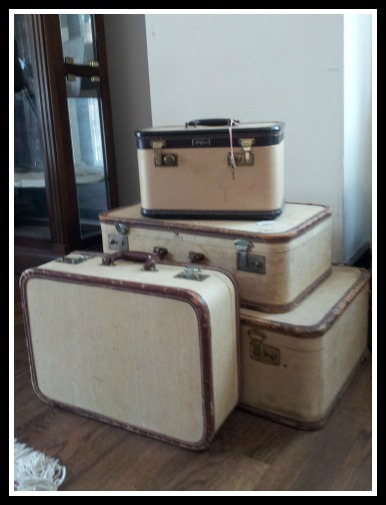
A set of Amelia Earhart luggage sits in the Earhart museum in Atchison, KS
In 1937 Amelia set off for what she thought was her final adventure- flying around the world along the lines of the equator. She said, “I am undertaking this one solely because I want to and because I feel that women now and then have to do things to show what women can do.”
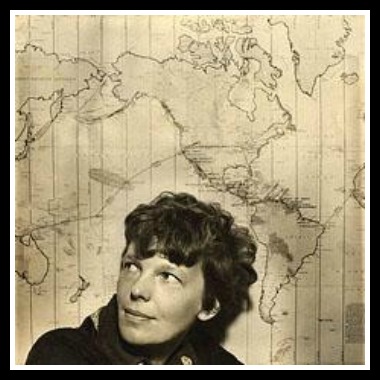
Amelia beneath a chart of her final flight
Preach it, Amelia!
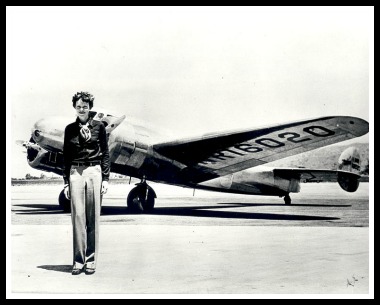
Amelia and the last plane that she flew, the Lockhead Electra circa 1937
We cover the final flight, as well as a number of theories as to what happened in the podcast, but anyone reading this surely knows the story: On what was to be her last leg of her flight something that may never be known happened. And, on July 3, 1937 at 8:43 AM the last known message of Amelia Earhart was heard. Amelia and her plane were never recovered.
TIME TRAVEL WITH THE HISTORY CHICKS
The Amelia Earhart Museum in Atchison, Kansas is pretty nifty. It looked like this the day we visited. Oh, yes we did! More to come on that field trip, we promise.
Amelia Earhart museum- this is her birthplace, where she lived with her grandparents! We took our kids and geeked out.
The Ninety-Nines are still active! Check out the work and community of these women pilots. The Ninety-Nines, Inc.
MOVIES! 2009 Amelia with Hilary Swank and Richard Gere, and the Biography documentary are available from Netflix. There was an Emmy winning 1994 miniseries with Diane Keaton, and The Last Flight with Rosalind Russel but we can’t find them online- might be your own adventure in research to dig up a copy. And, it’s a stretch, but Amy Adams plays Amelia in Night at the Museum II.
BOOKS!
It might be fun to start out reading the two books that Amelia penned: 20 Hours, 40 Minutes, and The Fun of It.
Non-fiction that we also liked about her life:
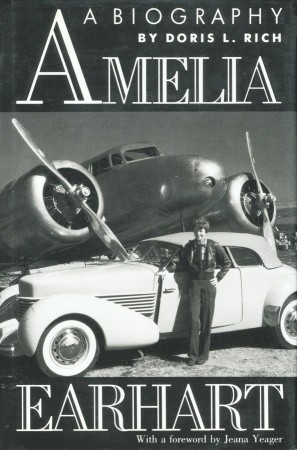
by Doris L. Rich
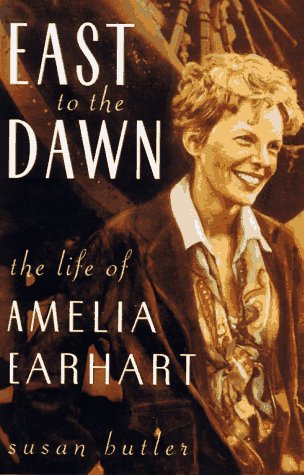
East to Dawn by Susan Butler
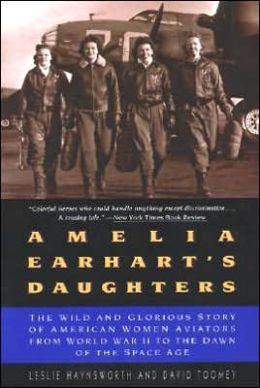
Amelia Earhart’s Daughters by Leslie Haynesworth and David Toomey
Amelia Earhart:m The turbulent life on and American icon by Kathleen C. Winters
By Tanya Lee Stone- really good for kids, or people who like a lot of pictures (hey, we like pictures, no shame in that!)
When you want to really nerd out about her disappearance here are some books for you:
Amelia Earhart’s Shoes by Thomas King and Randall Jacobson
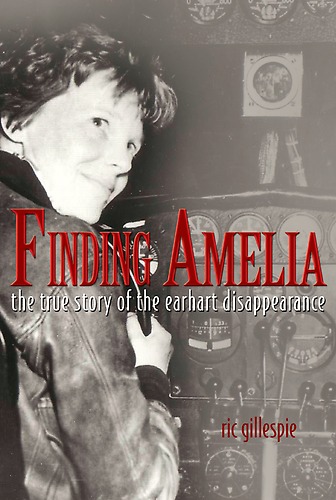
Finding Amelia by Ric Gillespie
If you want to see and read about her yellow Kissel Speedster, check out the ForneyMuseum!
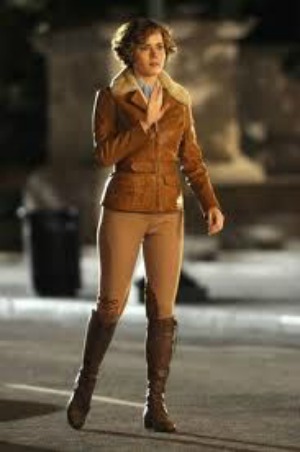
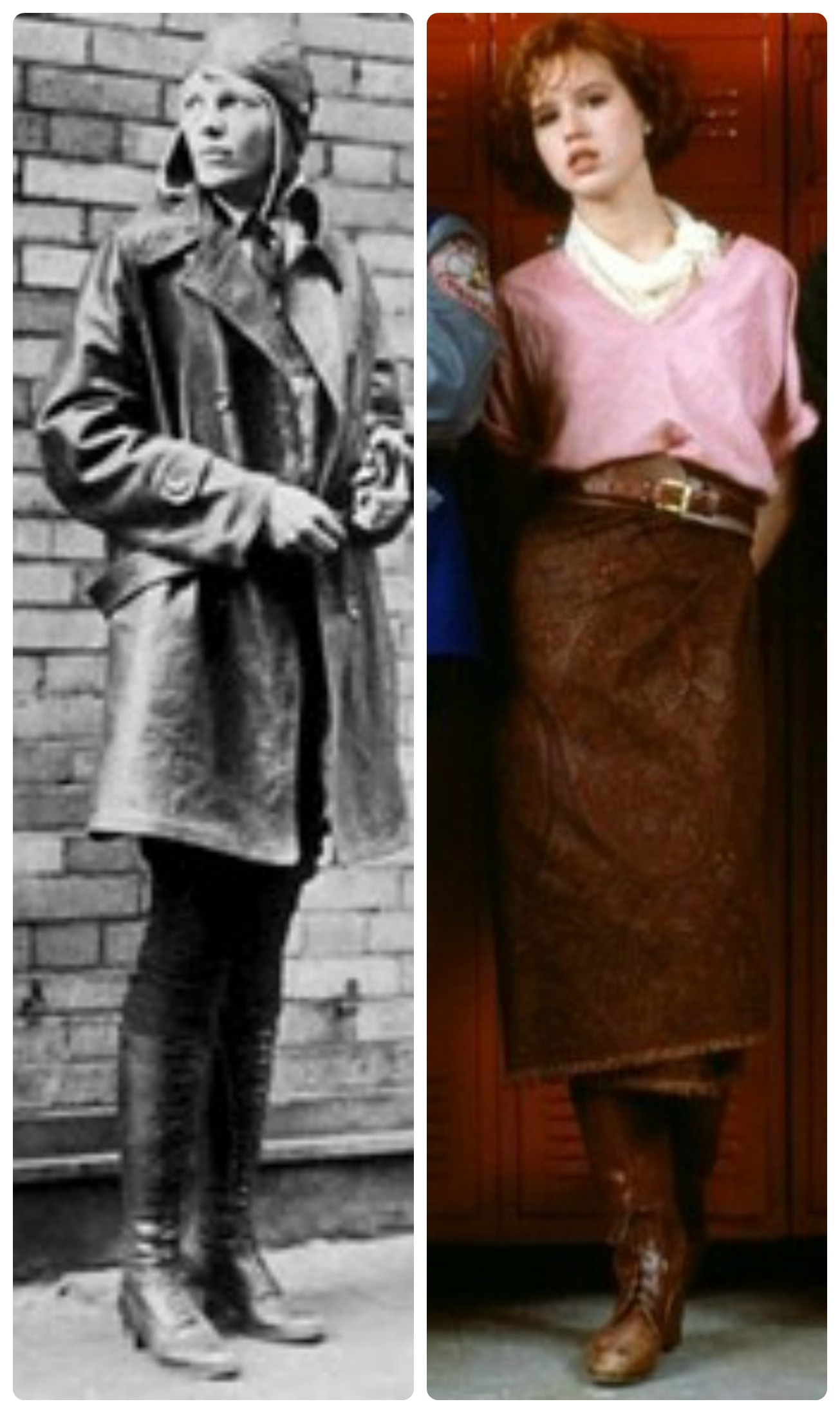
Finally, Amelia’s boots and Molly’s boots…no picture of Beckett in hers, sad to report.
Two iconic images from far flung generations show the importance of dressing with classic boots.
As always, music comes courtesy of Music Alley. Visit them at Music.mevio.com