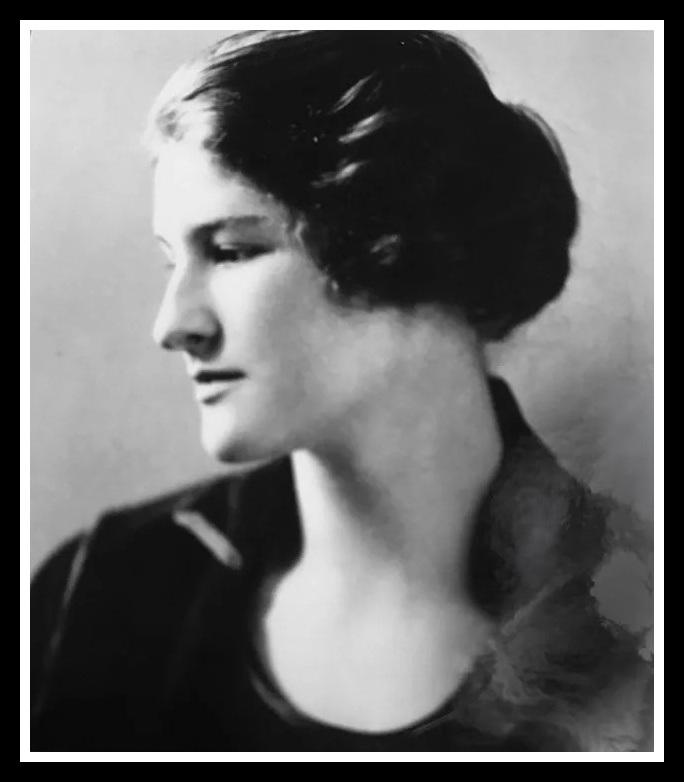
Virginia Hall wanted to be a diplomat, but the State Department kept shutting doors in her face …and then she lost her leg in a hunting accident, which seemed like she’d reached a dead end. Never one to accept defeat, she learned how to walk again on a wooden leg nicknamed “Cuthbert,” and headed straight into the world of espionage. Once she got to France, she ran circles around the Nazi intelligence services during WW2. The Gestapo actually called her “the most dangerous Allied agent in France”; her actions, and those of her compatriots, changed the course of the war.
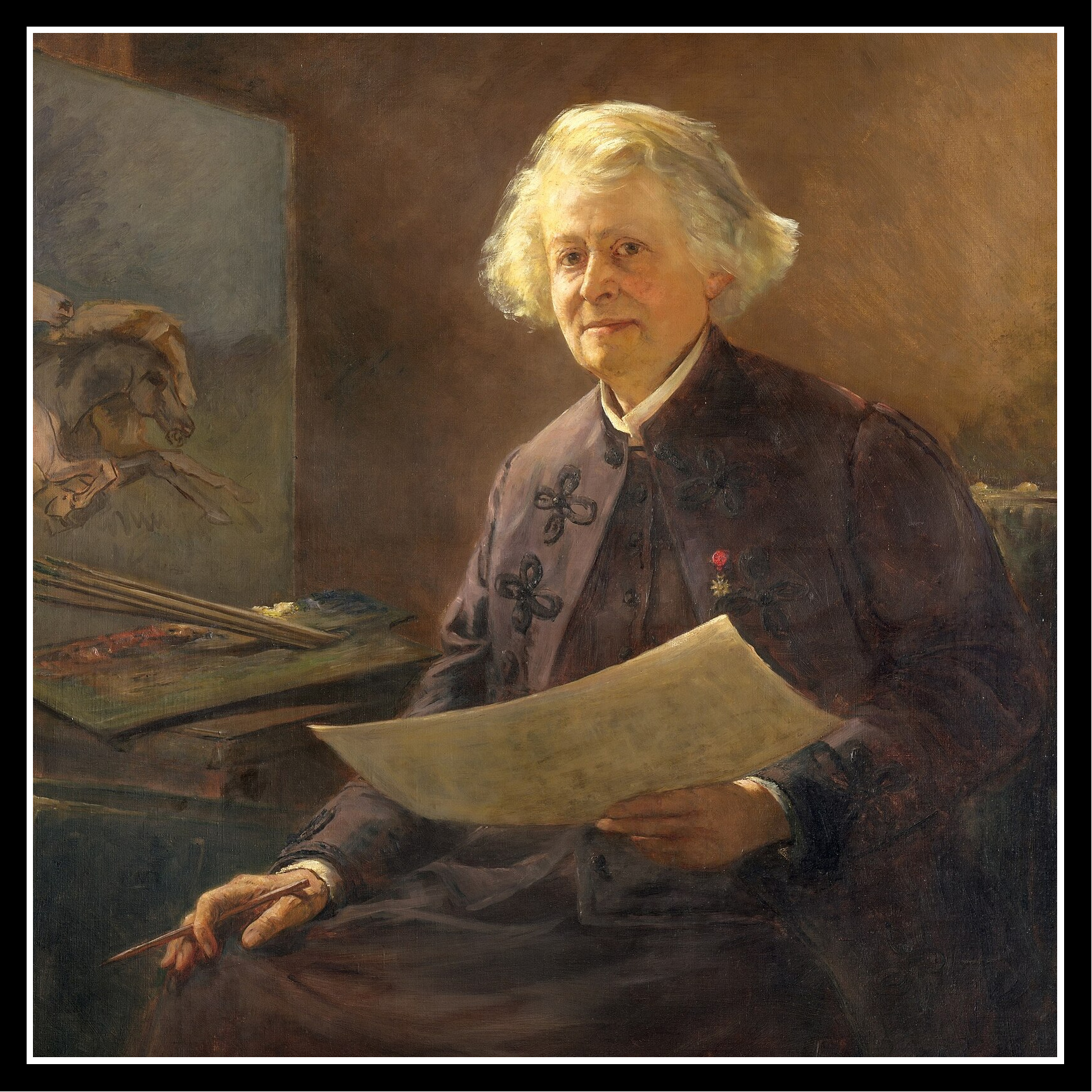
by Anna Klumpke, Rosa circa 1898, age 76 (That look on her face! Excellent.)
Rosa Bonheur was a wild, animal‑obsessed kid who drew before she could read, and knew she was meant for the world of art from an extremely young age.
She didn’t set out to shock anyone; she simply refused to be anything but herself, and the world eventually had to adjust to her as she climbed to the highest of fame as a painter in the 1800s.
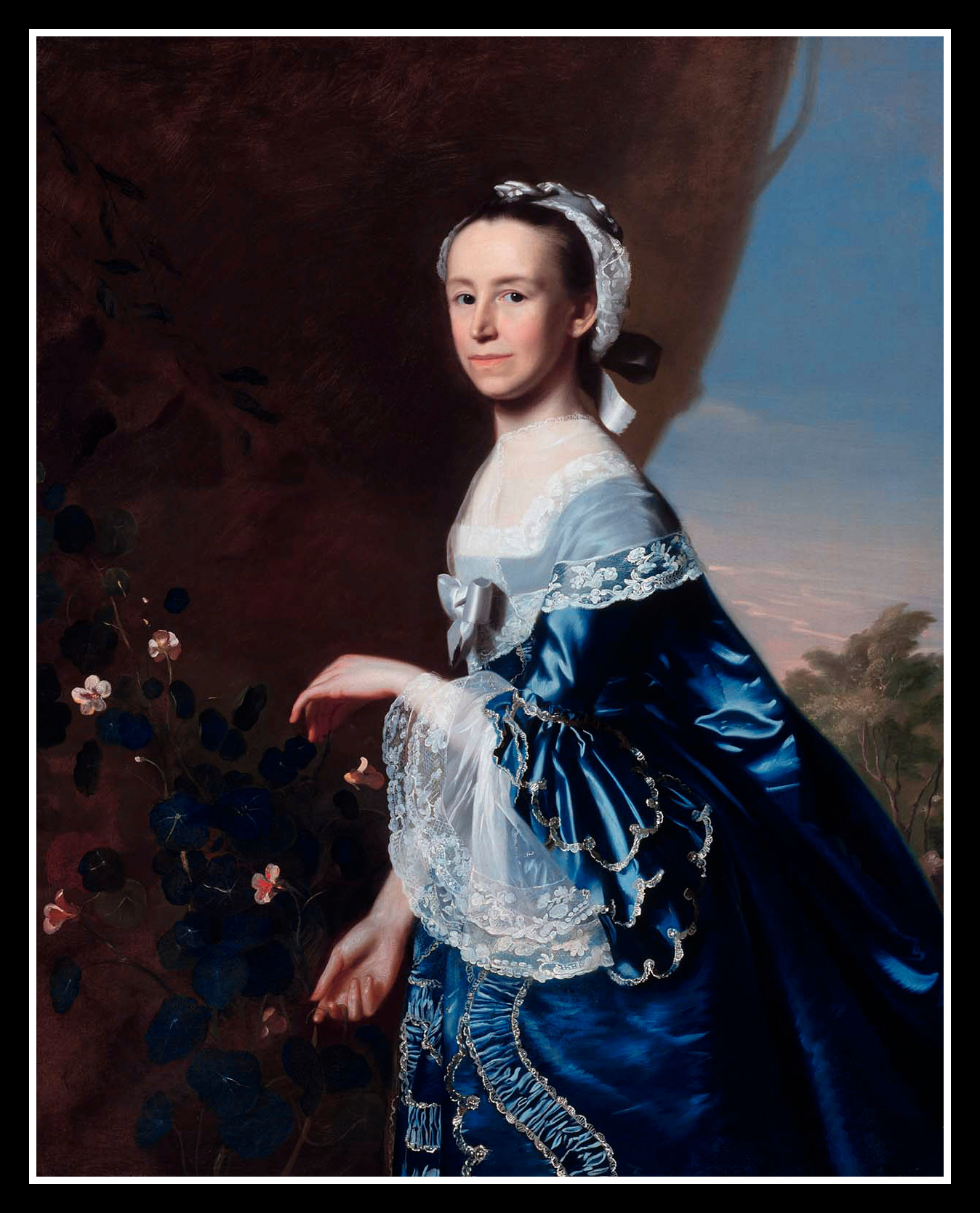
Mercy Otis Warren is remembered as the “Muse of the Revolution,” but simply being remembered at all is a testament to her intellect, writing skills, and tenacity.
Mercy was born on September 14, 1728, in Barnstable, Massachusetts. She was the third of seven living children of James Otis, Sr and Mary Allyne Otis. She was descended from Mayflower settlers, and as the oldest daughter in her generation, Mercy’s role in the family was pretty clear: she was going to be relied on to help her mother at home with babies and toddlers. That would, by tradition, simply prepare her for a life as a wife and mother. Period.
Mercy’s older brothers were sent for tutoring, but Mercy was so curious that, with her father’s permission (sigh) and her uncle the tutor’s encouragement (yay) she joined her brothers for lessons. When her older Bestie Sib, James, went off to Harvard, he would bring home his books and he shared his lessons with Mercy. All of this gave her an astonishing education for a woman of the time.
Mercy’s autodidactic education and intellectual curiosity never ceased. She married a man who encouraged and admired both qualities — James Warren (there were four Jameses in Mercy’s immediate family, so that was fun to keep straight.) All of this was during a time in American history when colonists were starting to feel unheard by the British crown that ruled and taxed and taxed…and taxed them. Soon, “Taxation without representation is tyranny” became a common cry among the colonists and their reason for rebellion and, ultimately, revolution.
Both Mercy’s brother, father, and husband were active in the politics of this uprising, and their home was a hub for Patriot leaders to meet and discuss options and actions. Mercy kept up on everything that was going on and soon put her pen to paper to write a satirical play that explained the situation to readers. Published anonymously, only a small group of friends (including John and Abigail Adams) knew that a woman wrote this and subsequent plays and poems.
Through her widely read plays, Mercy illustrated to Colonists the need to turn to revolution to gain their freedom from British oppression. During the Revolutionary War, she wrote even more pieces while raising five boys, often on her own, as her husband, James, was working in the Continental Army. Mercy maintained written correspondence and shared insight with many of the American Revolution’s most well-known leaders as those men turned from battle to the serious business of forming a new government.
Obviously, we get into so much detail in the episode! Mercy’s life is one long argument for the idea that political courage isn’t just found on battlefields or in legislatures; it’s found in writing, in conversations, in friendships, and in the willingness to speak plainly (and loudly) when power grows dangerous. She believed deeply that liberty required constant vigilance, and that ordinary people, especially women, have a role to play in creating ( and maintaining) the nation’s conscience.
It wasn’t until she was 62 in 1790 that Mercy’s name was finally attached to her published material: a book containing 18 new poems and two new plays about the newly formed country. And again she was credited when, in 1805, another book– thirty years in the making– was published: History of the rise, progress and termination of the American Revolution interspersed with biographical, political, and moral observations, by Mrs Mercy Warren of Plymouth.
Mercy Otis Warren survived her husband, beloved brother James, and three of her sons until her own death at 86 on October 19, 1814.
In the following years, Mercy’s name was overshadowed by those of the Founding Fathers, but she is, by any definition, a Founding Mother whose name and contributions need to be remembered.
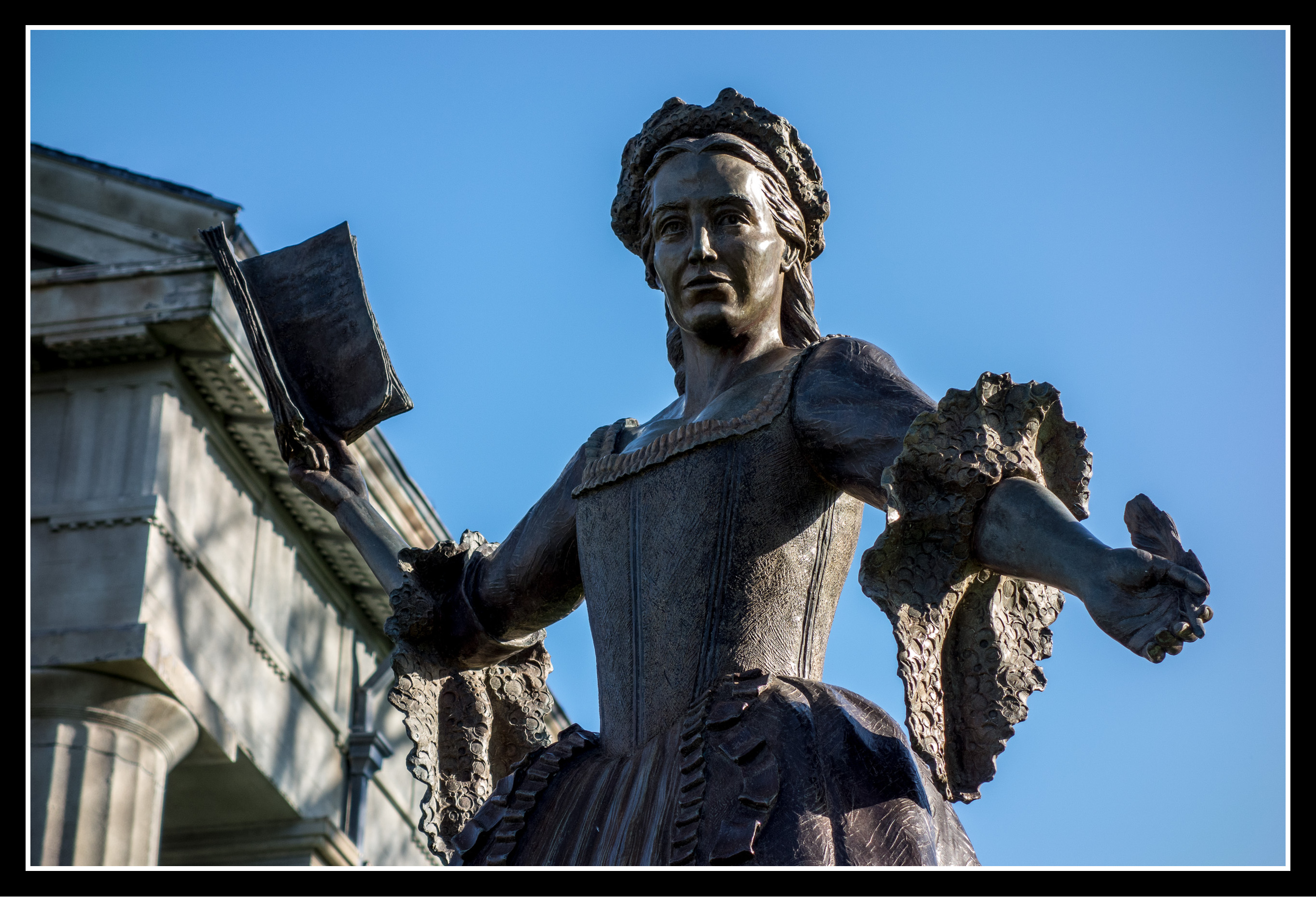
Mercy Otis Warren bronze statue at Barnstable County Courthouse, Massachusetts.
Registration is now open for our Paris Field Trip, April 24- May 2, 2027! Visit Like Minds Travel for more information and to register!Come With Us To Paris!
Time Travel With The History Chicks
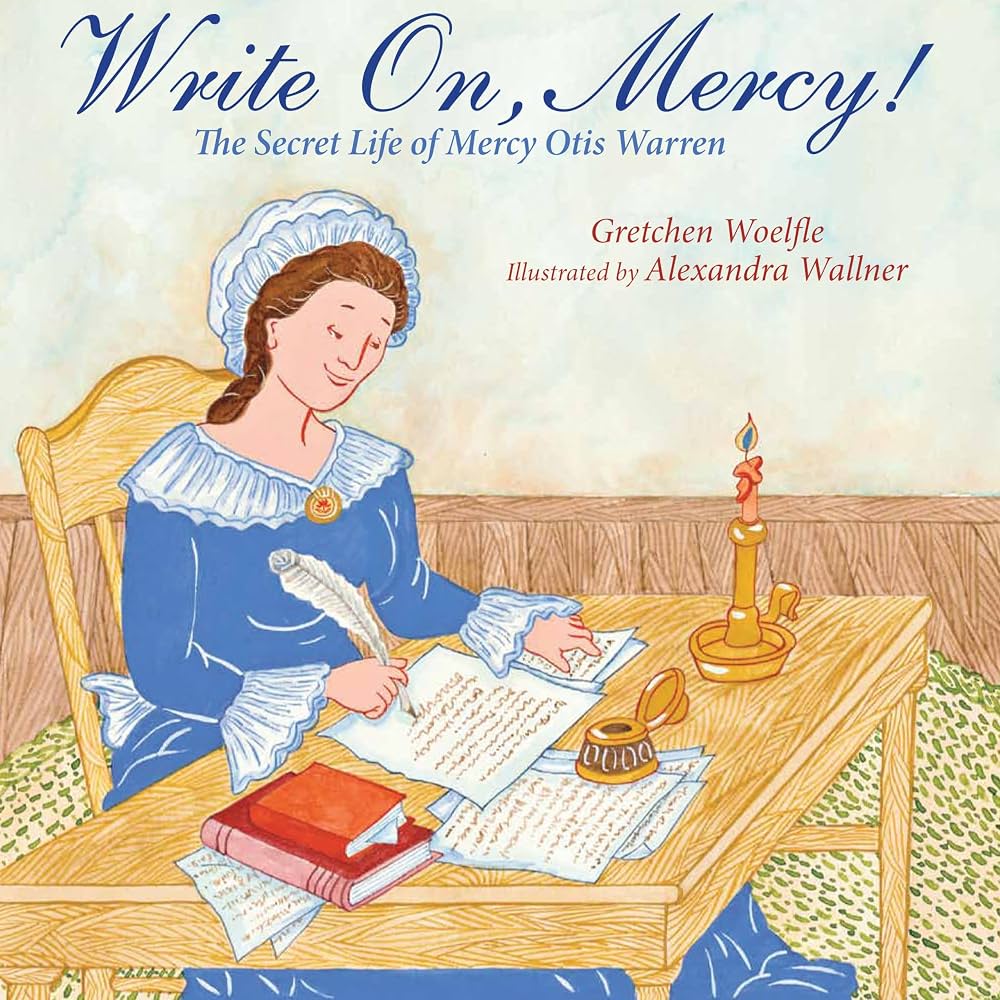
Books!
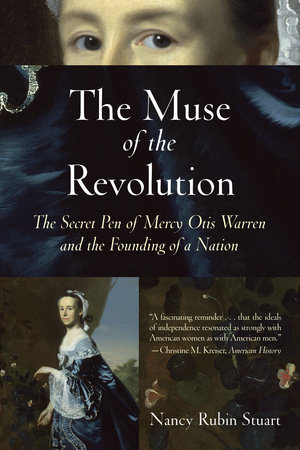
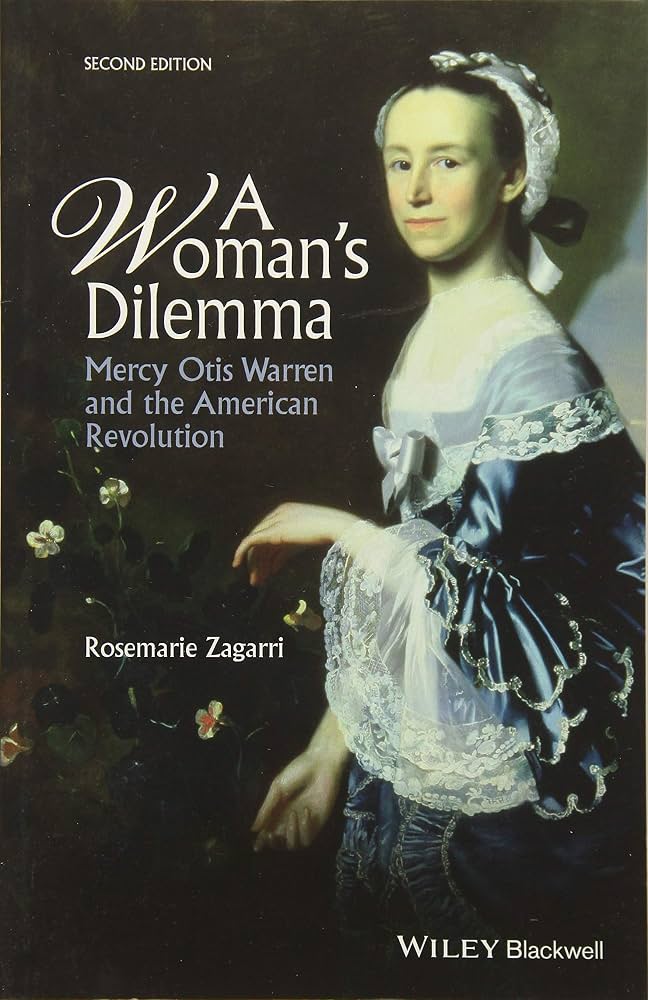
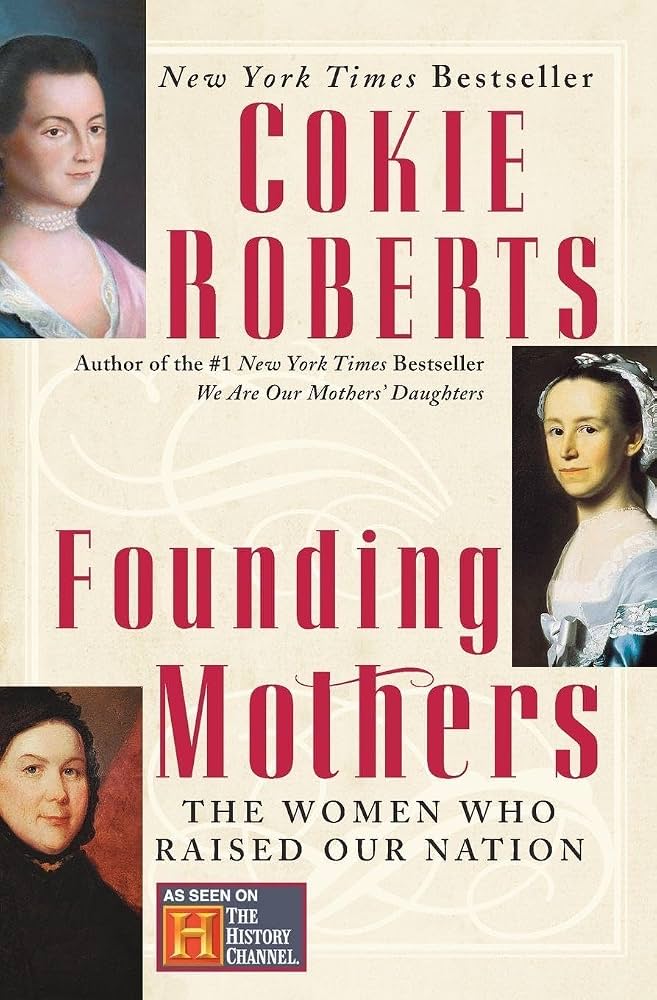
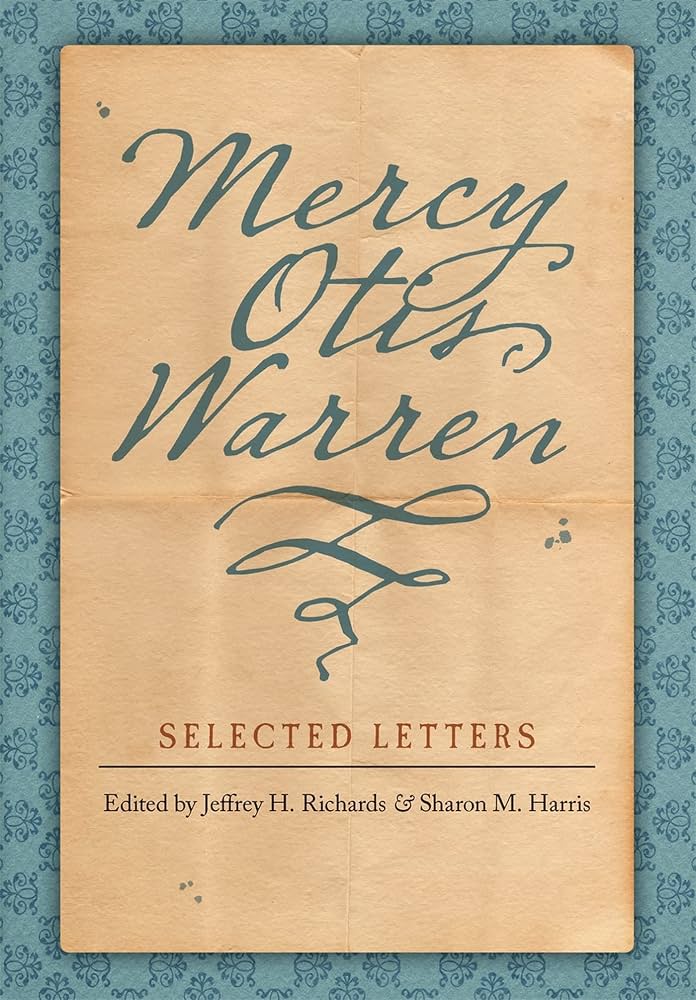
by Nancy Rubin Stuartby Rosemarie Zagarriby Cokie RobertsSelected letters edited by Jeffrey H. Richards and Sharon M. Harrisby Nancy Robinson MastersBy Carol BerkinBy Dorothy Mays
For kids:
by Gretchen Woelfle and Alexandra Walliner
(Note from Susan: Surely I didn’t dream of the children’s book based on the poem Mercy wrote after the Boston Tea Party…but I am still searching for it. I am not giving up! )
Web!
You can read Mercy’s work and insights into it online on Project Gutenberg, and this article on her play, The Defeat.
There is a quick write-up on her at the Old North Church (you should go there, it’s in Boston and part of the Freedom Trail!)
Speaking of Abigail and Mercy: Brittany Ellis at the University of Mississippi wrote a thesis on Mercy’s use of nicknames, including Portia (Abigail) and Marcia (Mercy.)
Moving Pictures!
There are none! However, we are more than happy to offer up some Mercy intel if there are any scriptwriters out there itching for a conversation about it! Hit us up!
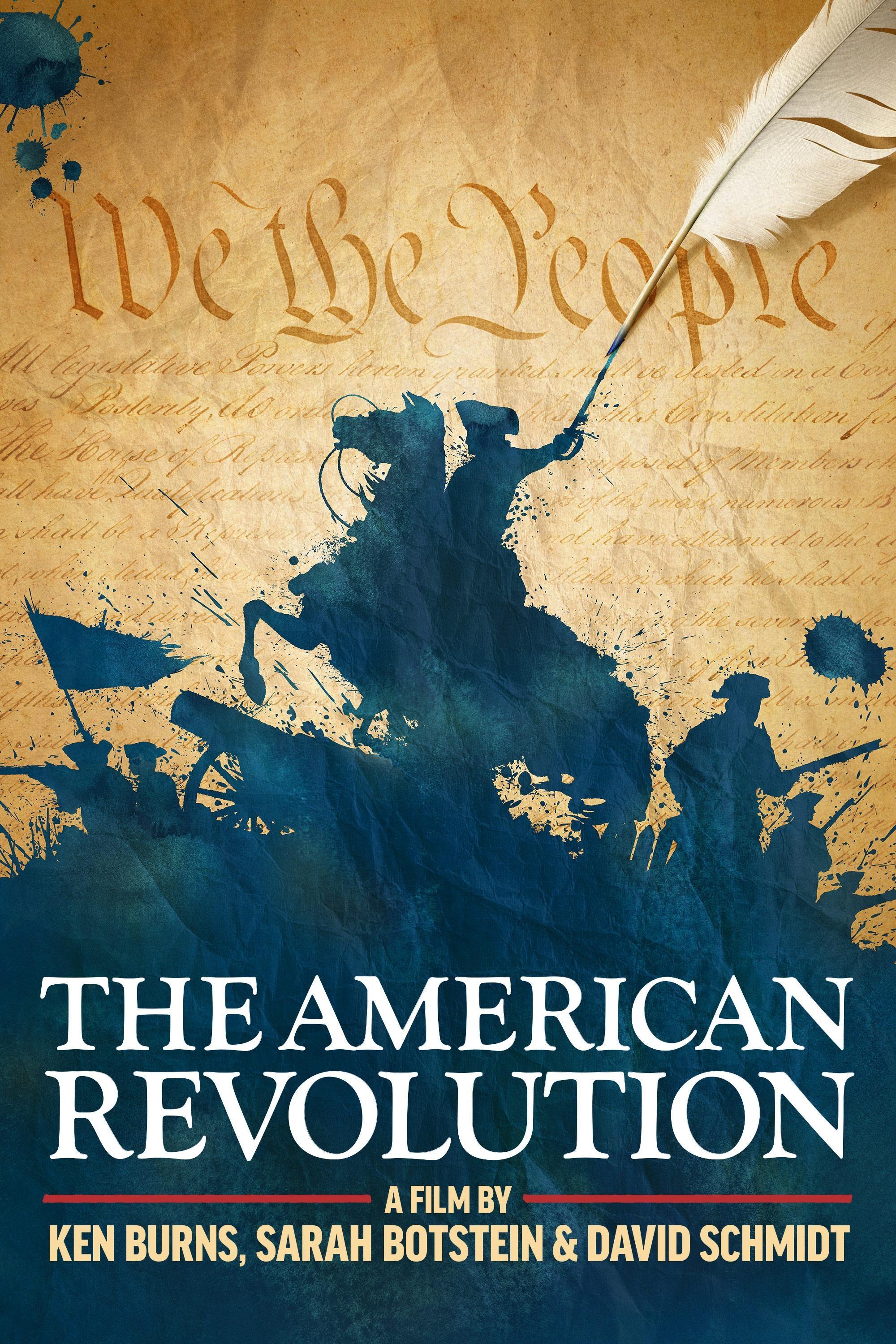
There is a Ken Burns documentary on the American Revolution, and Mercy is voiced by Meryl Streep. Of course it is. It’s an amazing documentary and will give you a very clear understanding of the Revolution: pre, during, and post. At the request of Ken Burns’ team, and with his co-director, we covered one of the other women of the Revolution, Betsy Ambler in episode our #247!
Finally, we would lvoe to travel with you on our 2027 Field Trip to Paris! For more information and to register, visit Like Minds Travel!
Middle music from: Joseph Hyden’s KaiserquartettOpus 76; End song: Freedom, by Torii Wolfe used with permission.
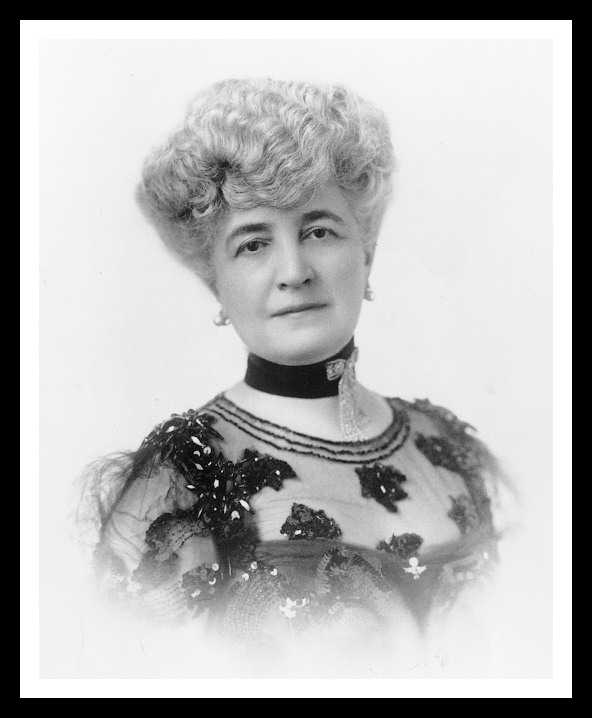
Bertha Palmer wore a lot of hats: Chicago socialite, patron of the arts, real-estate magnate, and all-around Gilded Age powerhouse. Her leadership of the Women’s Building of the 1893 World’s Columbian Exposition drew praise from all over the world. (and criticism, too!) We’ll also tell you about her influence on Impressionist art in America, and her surprising third act as a Sarasota land developer.
Anne circa 1684 Williem Wissing and Jan van der Vaardt
Queen Anne of Great Britain and Ireland did not have the longest reign, nor was she a dynamic ruler full of personality and dazzle, but she was better than that. She quietly had a long and loving marriage, suffered the emotional toll of 17 pregnancies and the deaths of the only three children that survived infancy, and instituted changes that are still relevant today. She was a popular and thoughtful monarch who brought stability to a country that had seen more than its share of chaos, and she did that despite England’s involvement in a war that lasted nearly the entirety of her reign.
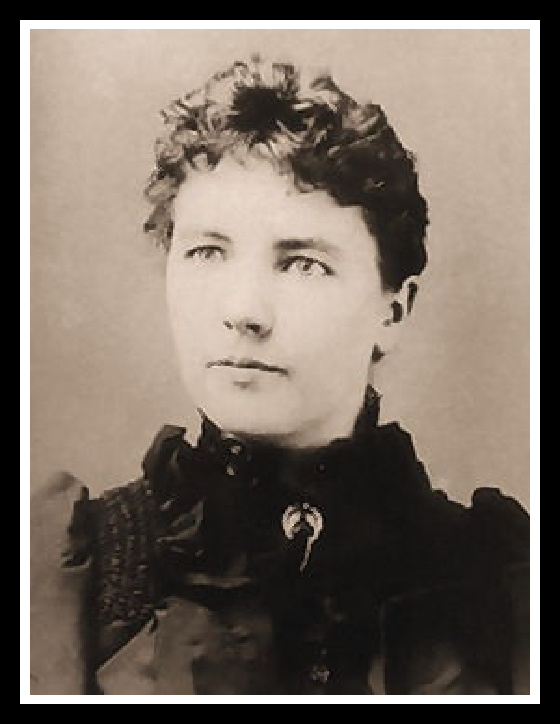
Laura, circa 1885 at the time of her marriage to Almanzo. via Wikicommons
Fifteen years ago, in only our second episode, we covered beloved author Laura Ingalls Wilder. Since the 1930s, her Little House book series brought life on the American prairie to millions…and that was before the TV show! Rolling prairies! Gingham bonnets! Half Pint! The books were based on the real life of Laura Ingalls Wilder, but “based on” is carrying a lot of weight here. What was the true story?
When we talked about her in 2011, we were newbie podcasters, and we used the materials and skills we had available at the time. While we have learned a few things over the years, that’s not the biggest difference in Laura’s story. Over those years, there have been A LOT of new studies and biographies about her that shine a light on the darker edges of her story. We decided to cover her again with the materials available to us now in 2026. The basic story is the same, but the details of it? The stories behind the well-known ones? Well, give a listen and find out for yourself.
Part One will cover Laura’s life beginning in Colonial America, through her parents’ story, and all the way to the beginning of her marriage to Almanzo Wilder. We hit all the times and places where her books were set, and the story is far darker than Laura shared in her beloved children’s book series.
TIME TRAVEL WITH THE HISTORY CHICKS
Here are a couple of media recommendations to tide you over until the next episode:
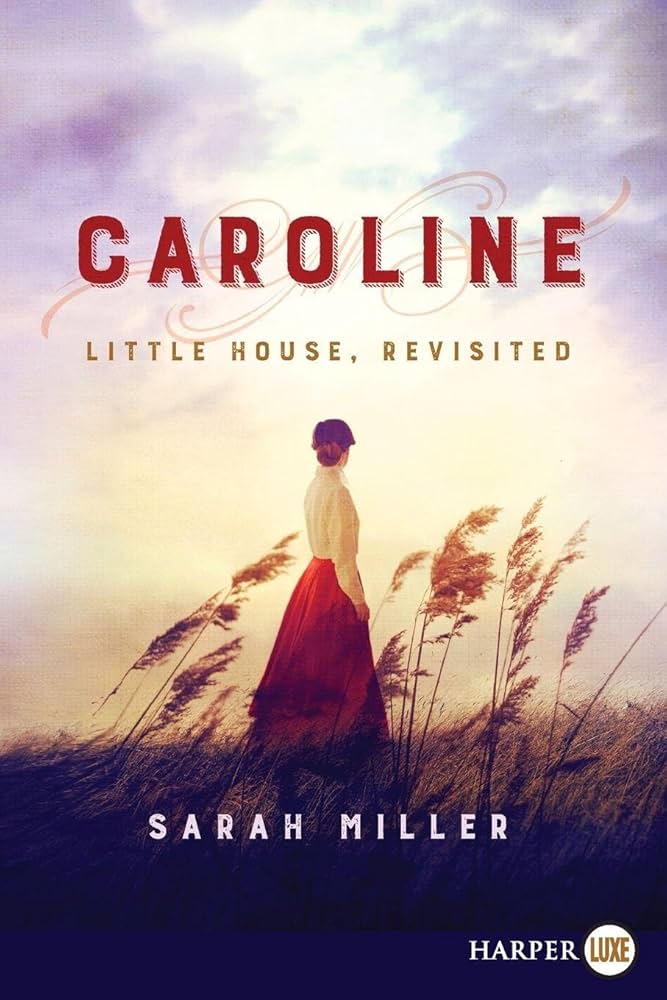
Beckett has a new fascination with whatever this historical fiction genre is. By Sarah MillerAn expert on Laura talks with other experts on Laura. Susan binged the series. Find this show on your favorite podcatcher
All the rest of our media recommendations will be listed in the second part of this series