We begin our second season with a woman whose life will take us two episodes to discuss. She wasn’t just black dresses, and talking about herself in the third person, you know! She led a very colorful and unique life! This woman was so influential that she had an entire AGE of improvements, fashion, behavior (and some really fantastic houses) named after her.
Queen Victoria.
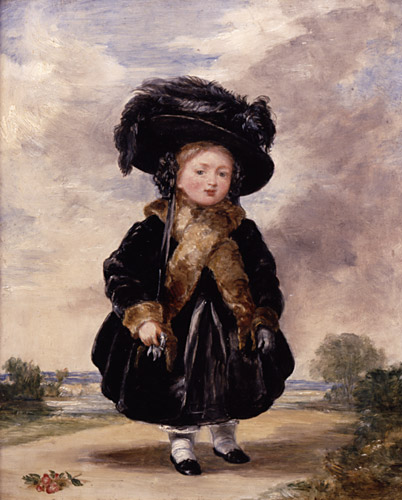
A young Queen Victoria circa 1840
Born on the 24th of May, 1819 in Kensington Palace to the Duke and Duchess of Kent, Alexandrina Victoria jumped the line to the throne. We cover the complicated path to the crown in more detail in the podcast, trying to make it as easy as possible to follow. Basically, it had been a race to see who would bear the heir after Princess Charlotte, the only legitimate child of George IV, died during childbirth a few years prior to Victoria’s birth. When Victoria’s father, Edward, died while Victoria was an infant, and his three brothers failed to produce an heir, she moved at a rather quick pace to the head of the line.
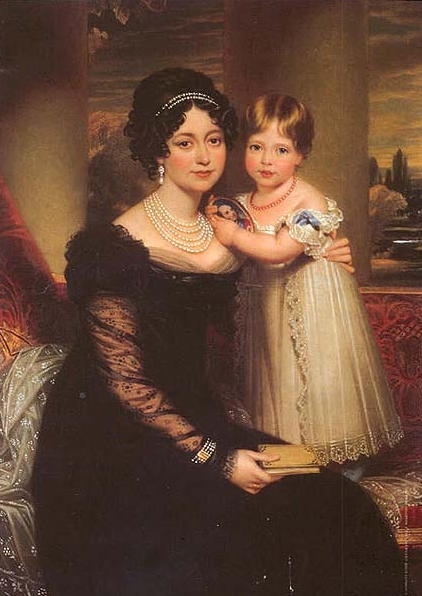
Duchess of Kent and about a two year old Victoria
Victoria was raised by her mother in a pretty wacky manner following a set of rules known as, “The Kensington System”. This method gave control over all aspects of Victoria’s life to her mother, as well as Sir John Conroy, a very ambitious and controlling man whom the Duchess had taken into her trust and was her Comptroller. Who Victoria saw, what she learned, where she traveled, even going so far as to not allow her to descend stairs on her own- these two people oversaw all of it, and, at times, spread slander about the heiress presumptive.
Ok, so she did wear a lot of black…
Why? They were bucking for a Regency. They wanted Victoria to sign a document that stated they- Conroy being the brains behind the pair- would have decision making power over her. But our Princess was born to lead. Even when subjected to some of the most manipulative methods possible, she never gave that signature.
Booyah!
We cover details of her life as a child, but that childhood ended at age 18 when her beloved Uncle and King, William IV died in 1834. She dropped the Alexandrina, and simply became Victoria, Queen of Great Britain and Ireland- one day a controlled teenager, the next head of the British Empire.
Cool.
Guess who is walking down stairs by herself?
Guess what Lord Conroy is banned from a certain Queen’s presence?
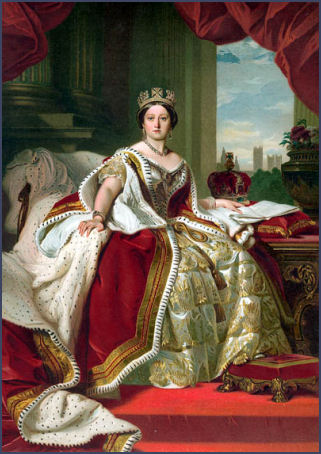
Which crown will we wear today, Your Highness?
We speculate a lot (because we can) about Victoria’s lifelong reliance on some male to aid her decision making. Not that it’s bad, it’s just how it appeared. First up: Lord Melborne who, at the time of her ascension, was head of the government. We talk about the Whigs and the Tories and the trusting relationship Victoria had with this man. He taught her the political ways , and she learned quickly diving right into the political world and making her impact on it.
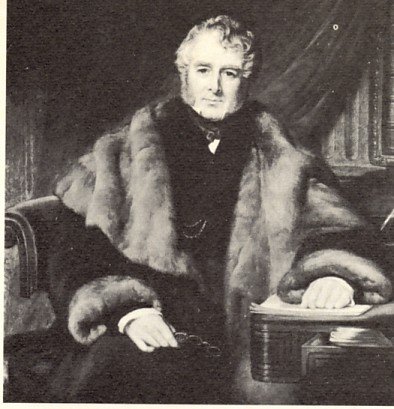
Lord Melbourne
We share some really nifty stories about her being the first sovereign to take up residency in Buckingham Palace, and some juicy tales about the early days of her reign as her popularity rose and fell and rose again.
We told you, colorful life!
And made even more so with the entree of Prince Albert of Saxe-Coburg and Gotha. The first cousin to the Queen, Albert and Victoria had met as children, but when the parade of suitors began their common uncle, Leopold (husband to deceased Princess Charlotte) encouraged the two. Leopold had been hard at work back in Germany with young Albert, grooming him for this very role.
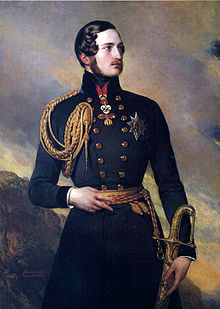
Young and dashing Prince Albert
But Victoria has spent her entire life working against manipulation- she can smell it coming. What she can’t see coming is love. Albert and his brothers visit their cousin, and within the week Victoria proposes. It’s a love match that happens to be a smart match as well.
Enter the second man that Victoria relies on as her sounding board. In a very regal wedding, they become Victobert. Ok, Victoria and Albert. This is the stuff novels are made of- partners of equal intelligence, shared convictions and a fiery romance to boot!
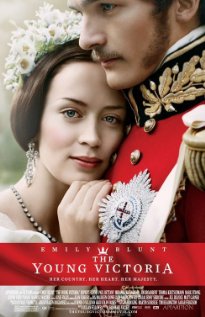
A movie that we liked and thought illustrated a great deal of the early part of her life is, The Young Victoria, a 2009 flick starring Emily Blunt and Rupert Friend. We question a few things, like Emily Blount not sharing a physical resemblance to the short, and um, curvy Queen, and the accuracy of the romance of the two, but overall a really great look at the early life of both the Queen and the pair which really are a love match that goes down in history.
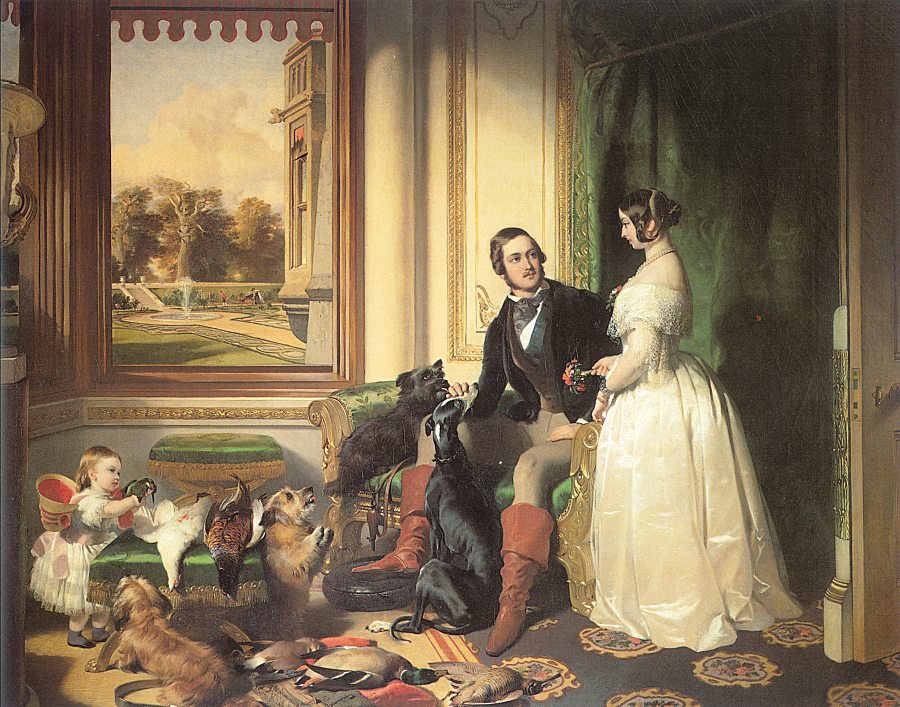
Uh, whatcha playing with there little princess, Vicky? ( by Sir Edwin Landseer)
Much to Victoria’s dismay, she learned early on where babies come from. All totalled, the pair would have nine children including our old friend, Bertie- we mean, Albert, who would grow up to impact the lives of our Gilded Age Heiresses
Come back next time when we dive into the life of Victoria without Albert (THAT’S where the black dresses come in!), drama about political games and manipulations of the longest reigning monarch in British history. What does happen to all those kids? Did she or didn’t see have an affair with a strapping Highlander? Mourning ( noon and night)? And more!
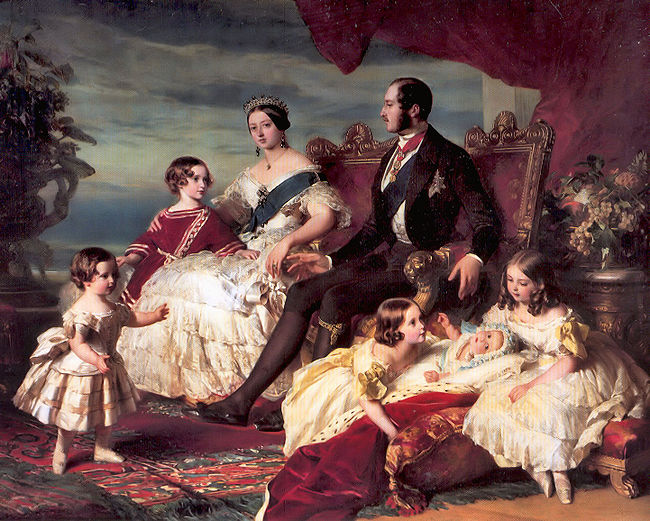
The Queen, her prince and a whole mess a’ royal kidlets (Franz Xavier Winterhalter)
Time Travel With The History Chicks
Stay tuned for part two coming soon and we will link you up with a nice list of ways you can learn more about the life of this fascinating woman!
We’ll give you some to tide you over:
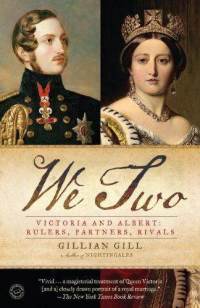
If you would like some reading to keep this story going for you, we both recommend We Two, Victoria and Albert: Rulers, Rivals, Partners by Gillian Gill.
And if you like your history visual, The Young Victoria. (Can’t stream it on Netflix, but they do have the DVD)
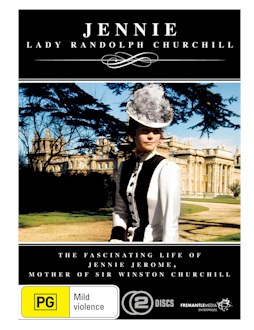
We wrap up our Gilded Age series with a lively discussion about one of the first wave of Gilded Age Heiresses- an American born woman who gave birth to a son who would eventually be known as one of the greatest Britons in history.
Jennie Jerome Churchill.
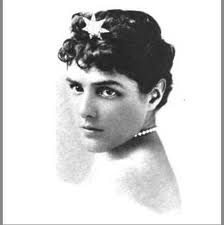
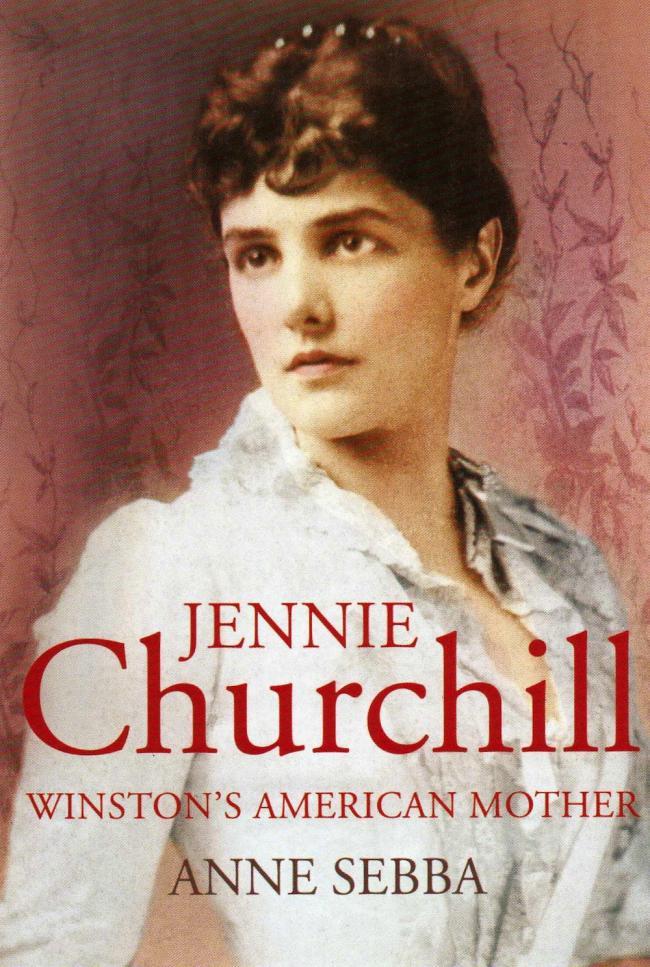
A young and captivating Jennie Jerome Churchill
Yes, we talked about her already. But we only gave a thin sketch of her life as a Dollar Princess- we never got to the really juicy parts! We promised you an episode on Jennie Jerome Churchill, and by golly, we are History Chicks of our word!
Jeannette Jerome was born in 1854 into a family with a father who was very good at making money, and also good at losing it…and making it again. Jennie and her three sisters were raised in a fairly wealthy home in Brooklyn, spent summers in Newport, and- when Mama had had enough of watching her husband dally around- lived in Paris.
While there, Empress Eugenie took a shine to the Jerome girls and Parisian life suited them all just fine until war broke out and Clara hustled those girls out of Paris to England. The beautiful Jerome girls quickly assimilated into English society, and when Jennie befriended Edward, the Prince of Wales- life really started to get interesting!
In 1873, a 19 year-old Jennie Jerome had a three-day romance that ended with a proposal from Lord Randolph-Spencer Churchill, the second son of the 7th Duke of Marlborough. She officially became Lady Churchill.
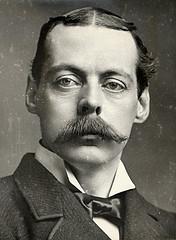
Lord Randolph Spencer Churchill. Think what you will.
We discussed the hoops the couple had to jump through before marriage when we talked Gilded Age Heiresses and the birth of her first son, Winston but there was a second son born to Jennie and enveloped in scandal as a great deal of this woman’s life is–the family was even exiled to *sarcastic gasp* Ireland!
She also possessed a remarkable resemblance to another famous Lady……ok, maybe it’s just us.
When Randolph passed away at age 45 (syphilis…of course it was syphilis) Jennie took up a couple projects, really modern things like starting a magazine and flipping houses—but her biggest success came when she finally turned her attention to her son Winston and his political career and, we all know how that worked out for Winston. (And if you don’t…google…come on, you need to know this one.)
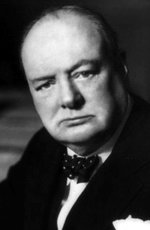
Winston Churchill (not W.C Fields)
Jennie isn’t one to be alone, there were two more marriages (the last one to a man 23 years younger than she…go, Jennie!) At the age of 67, in a very dramatic way, she falls down a set of stairs and amputation is required, gangrene develops and she passed away.
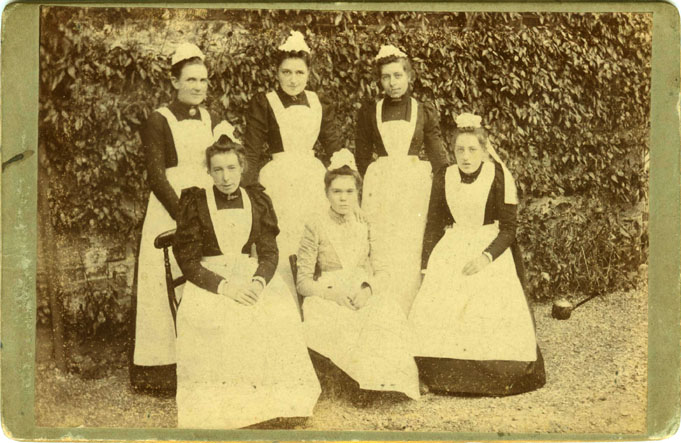
Not everyone in the Gilded Age had a wardrobe of Worth dresses and the luxury of boredom; an army of servants were required behind the scenes to ensure the Dollar Princesses’ success. The heiresses met this strict British hierarchy with varying degrees of competence.
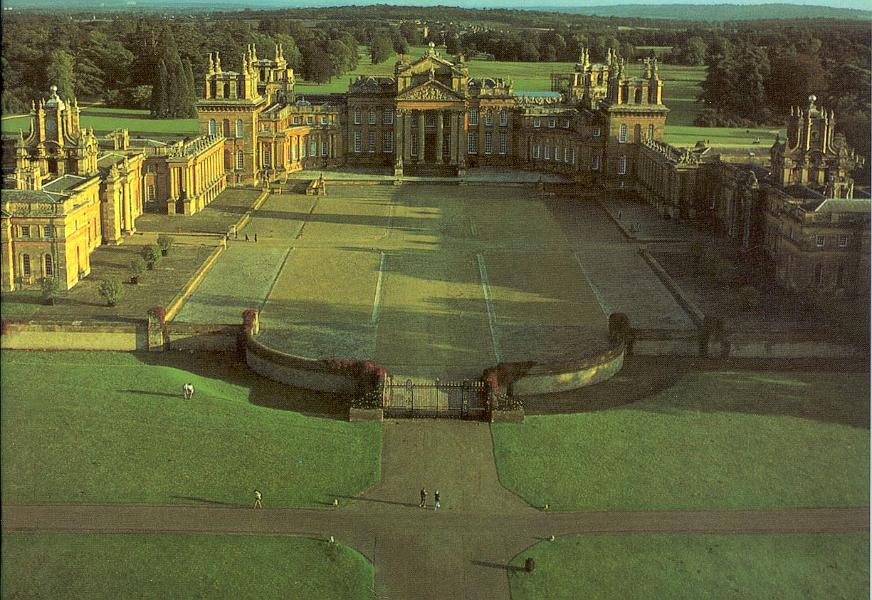
Consuelo Vanderbilt, who was once described as “barely allowed to move her own hairbrushes” at home, was given full control over 40 indoor servants upon her marriage to the Duke of Marlborough. Though given no real guidance from her husband, she soon learned that inertia was the best policy. Even her attempts to add more staff to relieve what she saw as the housemaids’ overwork was met with resistance – as was her request to add running water to their quarters!
Six housemaids were seen as quite enough, thank you very much…(This is the same palace that employed one man to wash all of these windows – and it took him a full year!)
Lady Troubridge’s “The Book of Etiquette” (1926) sets forth the ideal attitude for the upper classes in dealing with their servants, as follows: (Let’s hope the theory was also put into practice!)
‘It would appear that there are people who feel that those who labour in the capacity of servants are inferior, but in most cases it is those who place servants on a lower plane who are themselves inferior. We owe to those who take part in the work…more than the wages we pay them: we owe them gratitude, courtesy and kindness. They, equally, should treat their employers with courtesy and kindness, and they should regard it as beneath their self-respect to ask wages for work which they are not fitted to perform. A reliable servant holds a place of importance in the home, and it should be recognised in the social world as a place worthy of courtesy and respect.’
-I discussed briefly the most common indoor servants of the time:
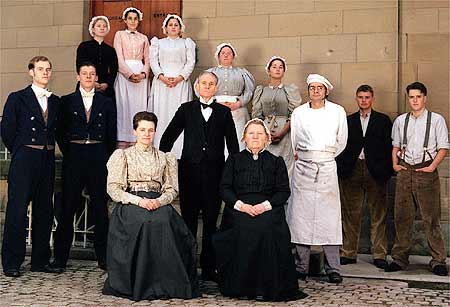
And a true obsession of mine, the wonderful, amazing “Manor House” series, in which modern people were cast as Edwardian servants and aristocracy:
Looks like any classic servant portrait of the day. Note the upper servants are definitely given pride of place in the lineup.
The show’s website is a must – so many things to see, including the daily schedules for each “servant” or “family member.” – and their rules of conduct.
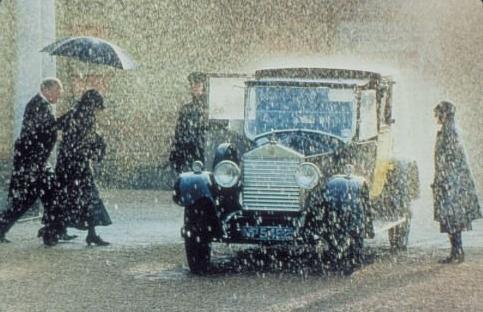
I mentioned the Robert Altman film “Gosford Park”, which (as it’s set in 1932) is well out of our period, but has great insight into the world of the country house servant. In particular, I love all of the “offices” in the basement, all the languor of the upstairs people while all chaos breaks downstairs.
Notice the lady’s maid and driver standing in the rain? They were not allowed to get into the car until the Countess did.
Here is the link to a wonderful article from Harper’s Bazaar in 1904, decribing (and showing!) the atypically luxurious accommodations for servants in that house.