by The History Chicks | Apr 7, 2012 | Biography Episode, News, Podcasts, Shownotes
Imagine that you followed your heart to live an honest life doing what you felt was right: working hard, marrying for love, aiding others, traveling and always, always learning. You were a wife, a mother, a socialite, an activist, a suffragist, and a citizen of the world. You were adored by many, inspired more and lived life in the fullest, kindest way that you could imagine. And, when you died, your impressive life story was altered to one that was almost beyond recognition. Often for the worse!
That’s what happened to Margaret Tobin Brown. You might know her as Molly Brown- the Unsinkable Molly Brown. A woman whose real life story was so much more impressive than the one that was assigned to her after her death.
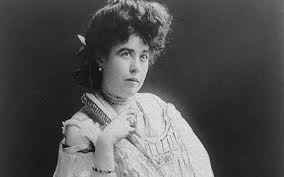
That’s a fan, not a pick ax! Margaret Brown: socialite, activists. mother, strong and educated woman. Not an uneducated gold digger.
Margaret Tobin was born a middle child of John and Johanna Tobin in Hannibal, MO on July 18, 1867. Her parents had ridden a wave of Irish Catholic immigration during a Potato Famine and landed in this western railroad stop of a town . John worked as a laborer for a variety of businesses while his children attended school and played in the same woods as another Hannibal resident had years before: Samuel Clemens.

The reconstructed Tobin family home in Hannibal, MO
The Tobin children had no more, and no less, than most of their neighbors. It was a frugal childhood, but not the miserable, motherless one of the fables of her life.
And another fable? She wasn’t called Molly, she was called Maggie or Margaret. Molly was just another fabrication to fuel the poor-Irish-upbringing image the media had created for her.
Oh! We could carry on about all the inaccuracies in the story of her life…oh, wait, we do. More details are in the podcast about how she traveled as a teenager to Leadville, CO looking to improve her life. How she worked hard and loyally first at a cigar factory in Hannibal, then in a department store in Leadville. How she wanted a better life for herself and her family and how she married for love, not for money.
Margaret and James (J.J.) Brown set up housekeeping in Leadville. They took on a little domestic help and hired tutors to continue their own education. Margaret’s family from Hannibal moved up, and they all became an integral part of a very tight community. Margaret was very active in civic activities. This wasn’t some dainty, wihte glove wearing woman (although she probably did wear them) she wasn’t afraid to roll up her sleeves to help those less fortunate than her. She was well liked, and liked many- the Browns were pillars of Leadville society. Soon they added two children to their family, Lawrence and Helen.

The James Brown family in Leadville, CO
Not overnight, and not by sheer luck, J.J. hit it rich. Gold. (This is the only gold digging in Margaret’s story!)
Leadville had been a silver mining town, but politics got in the way and the price of silver had plummeted. J.J’s mine, the Little Johnny Mine, was a boon to the town AND the Browns. They hadn’t been living in squalor, the family was very much middle class. But suddenly, they found themselves in a very different class. They were moving to the big city of Denver.

What was life like for the Browns in Denver? They fit very well into society. Not a tiny elitist portion, but the portion where most of the people of means were hanging. They traveled the world, entertained at home and abroad and educated their children in a variety of very fine schools both in the States and Europe. And Margaret? She was very much a civic minded lady and her former Leadville soup kitchen activites turned grander and more income generating. She was charming, knew the right people and knew how to separate the rich from their money for a good cause- she knew how to get stuff done.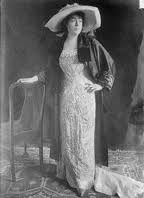
Doesn’t really sound like the activities of a woman who didn’t fit into society, does it? Listen to the podcast for the details of this time in her life, but at some point, Margaret and J.J. separated. They would never divorce, but live together they could not. J.J. was a workaholic, and Margaret, quite busy with her own endeavors as well as the travel (which she adored)- she had outgrown Denver and housewife duties. We name drop big time when we discuss the circles she traveled in but at this point Margaret was dividing her time between Newport, Europe and Denver living large and in charge where ever she went.
Yadda Yadda…she ends up on the Titanic.
Margaret’s actions on that fateful voyage were the stuff movies are made out of. She did help people in her lifeboat, she did attempt to get the lifeboat to return to see if there were survivors, she did row (as did other woman in the lifeboat),she did share her clothing, she was level headed…stripping down to almost nothing, cracking jokes and singing bar songs? Prolly not. But Margaret had spent her life helping people, she was smart and knew how to take command of a situation- those skills all would come into play during the hours in Lifeboat #6.
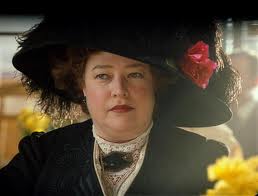
Once rescued by the Carpathia hours after the Titanic sank, Margaret and her caring ways really sprang into action! No resting in First Class for this woman, she was tending to the needs of all the recued passengers and shaking down the one’s that were traveling on the Carpathia. By the time they docked in New York, she had plans in place to keep track of -and get promised funds to- survivors; she had thousands pledged and plans to get more. With a heart bigger than her hat, she made sure that blame was placed properly, and heroism rewarded.

After Titanic, presenting gifts of thanks to the Captain of The Carpathia
In the years following the Titanic portion of her life, Margaret continued to travel, was deep in Newport society, attempted to run for a state Senate position, continued to be an advocate for those who she felt needed one, and never stopped learning. She died at the age of 65 in 1932 while in New York studying acting.
Margaret Brown was a multidimensional, big hearted, smart woman with charm and personality. The myths that surround her life, while entertaining, are not nearly as fascinating as the real life of this remarkable woman.
Time Travel With The History Chicks
Books! The first one we loved a lot, had so many,”Wow! She was a rockstar! Who knew!?” moments for us:
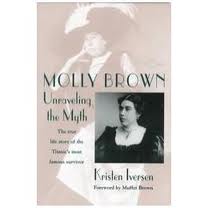
Molly Brown: Unraveling the Myth by Kristen Iversen
The second is a kids’ book, but we thought it did a fun job of telling her philanthropic story (and the photos were terrific):
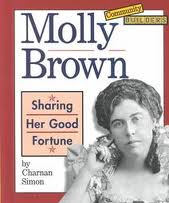
Molly Brown: Sharing Her Good Fortune by Charnan Simon
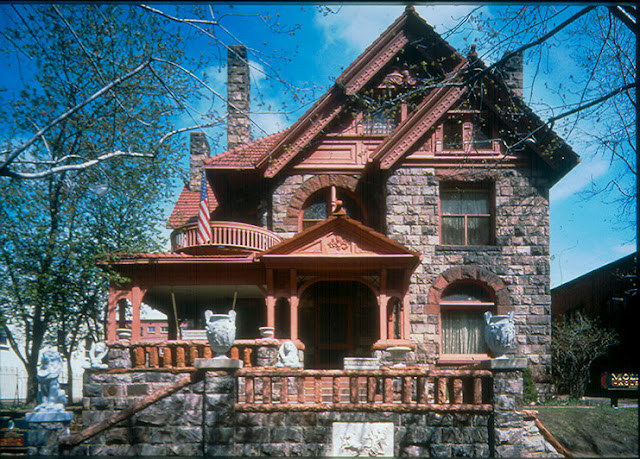
We love our museums! If you are in Denver, check out the Molly Brown Museum which is in the former Brown home. And a related blog with some really wonderful posts, Between the Lions.
Near Hannibal? The Molly Brown Birthplace and Museum will show you where she began her adventure and developed the strong character that would propel her through life.
There is a brand new… museum? Theme establishment? Convention center? Birthplace of The Titanic?Not quite sure what it is exactly, but it’s pretty cool looking and sits where the Titanic was built in Belfast, Ireland. Titanic Belfast
Curious about Leadville? We were and found lots of answers here!
What about mining Ghost Towns of Colorado? This site is very fun to poke around on, Coloradopast.com, they have pictures of how the Little Johnny Mine looks today, as well as other signs of Colorado’s past. Links to some other Ghost Towns in the US, and lots of beautiful regional photography as well.
Ok, we carry on about how painful this was for us to watch, but you don’t have to believe us! You can experience the same pain (now that you know the real story of her life):
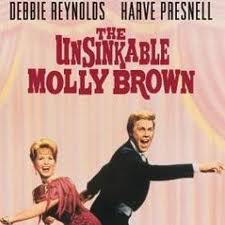
The Unwatchable Molly Brown
As always, music comes courtesy of Music Alley. Visit them at Music.mevio.com
by The History Chicks | Apr 1, 2012 | Biography Episode, Episode, Podcasts
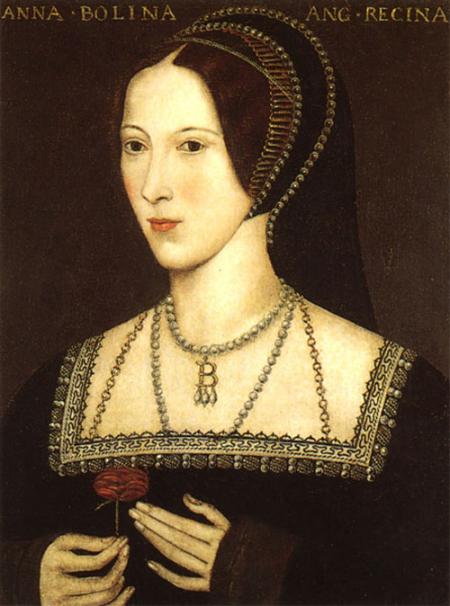
In this minicast we discuss the life of of Henry VIII’s most talked about wife-Anne Boleyn. Of all the six she lives on in story, speculation and fascination although she had a longer run attracting the Queen’s crown than she actually wore it. Anne died only four months after Henry’s first wife! (and by “died” we mean Henry had her executed.)
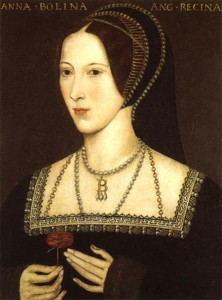
Anne was the daughter of Sir Thomas and Elizabeth Boleyn. While she was of noble birth, very little is know about her early years. We know that she was one of three children born to the Boleyns. We know that she was raised Catholic, but converted to Protestantism at some point.That her father was a diplomat serving under Henry VII and, later, under Henry VIII and, while it was probably expected that the Boleyn children would land at court and that they would have been educated for that role-the details are lost. There is not even a consensus as to what year Anne was born! Maybe 1500, maybe 1509, probably close to the former, but you want exact? Good luck.
It is known that she was presented and served under the Archduchess Margaret of Austria. That she accompanied Mary Tudor ( the sister to Henry VIII) to France for her marriage to Louis XIII, and that she stays there to serve Queen Claude. But, like her early years, not a lot is recorded about her age, and these years.
What else is known? When she returned to England she was very Frenchified. Anne had learned a great deal in France about court life: dress, dance, etiquette, languages. Her sister Mary had a similar court based education and had “matriculated” earning honors in horizontal games. ( Yes, we are being childish and euphemistic, we’ll own that!)

Mary Boleyn, the more"giving" sister
Anne did not see that method as her key to attaining the position she desired. She attracted several suitors and even had a rather scandalous betrothal that did not culminate in a marriage. We go into details during the podcast, but let’s just say Anne’s methods of attaining position had little to do with giving in, and everything to do with attracting.
Upon her return from France, her father sends her to court to be a lady in waiting to Queen Katherine. There, the already married King Henry VII quickly falls for her charms. What ensues is the history that is known about her life.
How she would not give in to the Kings advances, unlike her sister Mary. (Oh, we love us some smutty tales!)
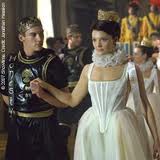
Speaking of smutty tales...we like Showtime's, The Tudors, but as entertainment, not entirely historically accurate.
How she kept her eye on the prize: the Queen’s Crown although it rested on the head of Katherine of Aragon at the time.
How she played this game with Henry for years while he attempted to leave Katherine, and how she ultimately aided the King in breaking from the church, Katherine and marrying her.
Once crowned Queen she wasn’t exactly the most popular, especially riding the heels of the adored Katherine. But part of Anne’s allure, part of the carrot she dangled to snare Henry was that she could do what Katherine had failed: Produce and heir.
Well, she did, but not what Henry had in mind. He wanted a son and the only living child to come from Anne was a daughter, Elizabeth.
Soon, Henry was dipping into the affair pool that was the ladies- in- waiting to the queen. He has several affairs and finally spies his next wife among them- Jane Seymour.
But he has to get rid of Anne before he can marry this beauty who surely will give him the son he so desires. Being King he gets his people on it. Soon many are arrested -including Anne- on grounds that she had an affair. The charges? Incest! Adultry! Treason! Included in the pack: Anne’s own brother George! Oh you have to listen to the podcast, we go into much more detail and specualtion and drama. Oh, the drama! But this was swift justice on trumped up charges and the final outcome for Queen Anne?
Off with her head!
On May 19, 1536, Anne Boleyn is beheaded.
It was a short reign, but the changes to England that took place during it changed the course of history. And, think what you will about Anne, but she gave birth to the woman who would one day change England again, Queen Elizabeth I.
Time Travel With The History Chicks
Books!
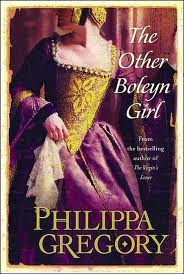
Can't go wrong with some historical fiction by Philippa Gregory!
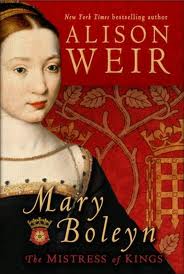
Or some Alison Weir!( Yes, this is about Mary, not Anne, but we thought you might be interested in her,too.)
Blogs? There are QUITE a few out there, but here are a couple that might get you started learning more about Anne Boleyn. ( Just because she wasn’t our favorite wife, doesn’t mean that everyone agrees. Come on, plenty of wives to go around!) Check out The Anne Boleyn Files and On the Tudor Trail .
Follow Anne on Twitter!
As fodder for drama, none come close to Anne Boleyn. Romance, intrigue, allure, politics, religion, scheming…and more all swirled around the fast life of this woman whose motto was, “The Most Happy”.
Music courtesy of Music Alley. Visit them at Music.mevio.com
by The History Chicks | Mar 17, 2012 | Biography Episode, Episode, Podcasts
As we continue in our Tudors series, we take some time to discuss the life of Henry VIII’s first wife, Katherine of Aragon. She was born from royal stock, had a wicked awesome role model for Queenly duties in her Mama, and lived the life that was planned for her from a very young age. Ok, so maybe she didn’t have exactly a storybook Queen’s life, but a Queen she was born to be, and a Queen she became.
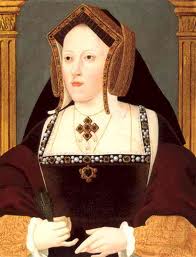
Katherine of Aragon
Born in 1485, Katherine (“Catalina”) was the youngest of five surviving children of King Ferdinand of Aragon, and Queen Isabela of Castille. Joint rulers of Spain. (And honestly, Isabela had a bigger piece of the pie.) Isabela was smart and fearless and lived her early years under the control of an older brother. She fought off arranged marriage after arranged marriage and eventually created a betrothal of her own on the sly, snuck out of the castle and married Ferdinand.
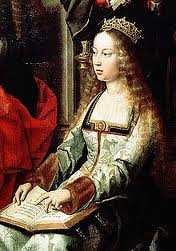
Mama, beautiful Queen Isabela of Castille
Once crowned joint rulers, this power couple took the fam on the on the road and began to acquire real estate all over what is modern day Spain. They tossed out Moor ( the Muslims of the area) and Jew alike in a period called, The Spanish Inquisition. We discuss what life was like during this time, the education of a young Princess, and some of the challenges of life, but young Katherine grew up not only on the road, but knowing where she would eventually put down roots. England. From the age of three she was promised to Arthur, first son of King Henry VII and the future ruler of England.
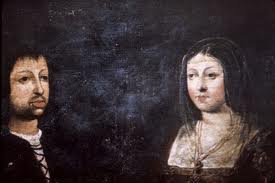
Ferdinand and Isabela of Spain: Power Couple
And, BTW, this is the same Queen Isabela who bankrolled a young startup named, Christopher Columbus. (We hear the bells going off in some of you! Nice!)
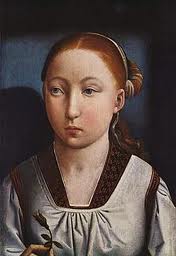
Young Katherine by Juane de Flanders

You thought she looked like this, didn't you?
Eventually, young Katherine left her warm, tropical homeland and set sail for cold, damp England. She was met with much fanfare (after a rather strenuous journey) and married her Prince.
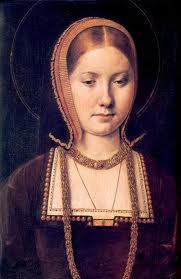
Katherine by Michael Sittow (She was a blue eyed Ginger!)
Who died on her a few months later.
What WHAT?
But, have no fear, Dowager Princess of Wales! King Henry has another son, you can marry him! In seven years, if we don’t find a better match for him first. And oh, do you mind living in less than regal living conditions until then? Great, thanks.
For whatever reasons, once Papa Henry passed, and Henry VIII was crowned, he made good on his betrothal and married Katherine. For a while they seem quite content. She is advising him on political matters, while sewing his shirts and getting on the Baby Train.
But the tracks are a little bumpy. Of seven pregnancies in nine years, they only have one living child, a daughter named Mary.
But Henry is needing that heir. And he has a woman in his sights who he thinks can provide that. But first, he has to get out of this marriage. He thinks he has a loophole! Katherine had been married to his brother! That makes her his sister! And, yes, the Pope had agreed to the union, but Henry thinks he is being punished by God for it. At least that is what he claims.
Yada Yada…England breaks from the Catholic church, Henry becomes Head of the Church of England and his marriage to Katherine is ended.
Except Katherine is having none of this! Oh, it’s very dramatic, she is trying to save her place with the man she sees as her husband, AND trying to keep her daughter from becoming illegitimate. She tries to holds tight to her title as Queen. Unfortunately, she can’t hold tight enough. Henry is moving on to Wife number two, Anne Boleyn.
As always, we go into much more detail in the podcast, and answer some of the common questions of this time, introduce you to a few more key players (Wolsey) fill in a little more to this very sad, Royal Soap Opera. But Katherine is shuttled from one dark and dreary home to another and dies of a broken heart. Ok, not really, she had a massive tumor on her internal organs. (But our ending is more dramatic, right?)
On the day of her funeral, Wife Number Two, Anne Boleyn gives birth to a stillborn son.
Interestingly, only four months after THAT, Anne Boleyn’s reign as Queen ends. Badly. But that’s a story for another episode!
TIME TRAVEL WITH THE HISTORY CHICKS
We start off our recommendations with some historical fiction.

It's like we have a thing for Philippa Gregory! The Constant Princess
Non-fiction more your thing? We also liked this one:
Here is a fantastic one…that is in good condition, unlike the one Beckett brought back to the library.
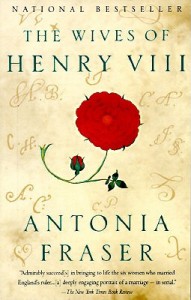
The Wives of Henry VIII, by Antonia Fraser
We did tell you that you can get character tweets from “Katherine” but she hasn’t tweeted since November, so we can’t vouch for info in your feed. Here is a Henry VIII to fill the void.
Luminarium.org is a wonderful online resource for all things British history!
BBC’s Supersizesr Go! Elizabethan is on Youtube, here is a link to their channel. The episodes are broken up into parts (Elizabethan is six parts) but well worth the time. Funny and educational you don’t even know you are learning something! We love that!
Music courtesy of Music Alley, visit them at music.mevio.com
by The History Chicks | Mar 1, 2012 | Biography Episode, Episode, Podcasts
(more…)
by The History Chicks | Feb 21, 2012 | Episode, Podcasts
We do typically talk about the women. History Chicks: It’s not just who we are, but what we discuss. But this time? We needed to talk a bit about The Roosters.
Yes, we will devote the rest of this series to the women, but we have to give you a teeny, tiny Tudor tutorial to set the stage. And that kind of talk requires us to focus on the men.
But before we do all that, can we just carry on..again…about the names? It wasn’t just our imagination! We’ll throw out some stats in the podcast about the repetitiveness of certain names. In this case: Richard and Henry, with a few Edwards thrown in for good measure. Really! It makes looking back so very confusing!
Back to the Tudors. As a family, they only ruled for a historically short period of time- only three generations, 118 years. That’s it. But in that time we had some seriously note worthy rulers! But first, they had to take power. The Wars of the Roses had been going on for a few decades. Unlike the. fairly easy to understand line to the throne of the modern British monarchy,this time period was rather fuzzy. Two houses, Lancaster and York, played a tug of war of sorts back and forth for quite some time. We give you the skinny on the real flags they fought under (the macho red dragon), but time has simplified the images down to two roses: The House of Lancaster represented by the red rose badge, The House of York by the white. Years later Shakespeare would use picking of roses as a choosing of sides analogy, and many years after that the phrase,”Wars of the Roses” was coined in a Victorian novel by Sir Walter Scott. But the real battles were neither cute nor as sweet as a rose.

Perhaps just a convenient twin?

The real deal; the Yorkists' white rose.

The new and improved royal brand identity.
We talk about all of it in the podcast: how the two branches of the same family, fueled by generations of feuding and slaughter, eventually ended up in a battlefield with two men in the lead: Richard III (York) and Henry Tudor. How Henry Tudor whipped himself up a nice little army, and how Richard III had lost some admirers (that happens when you kill them) and didn’t really have the military backing necessary to fight. Richard fell. Hard. Dead. And Henry picked up the crown.
As Henry VII, the first of the Tudor kings, he married Elizabeth of York. This union combined the Houses and (someone, maybe his PR people) developed the the emblem that we associate with the Tudors, the combined white and red roses.
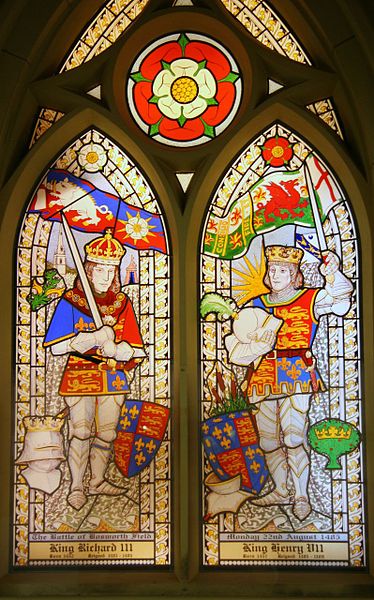
Richard vs. Henry

Don't see this movie. That's WAR of the Roses..not WARS.
In the podcast we give a little bit more detail into these lives and times that are quite complicated; but if we had to sum up all those men in just a few words it would look like this:
Henry VI- Coo Coo
Edward IV-Not taking anyone’s crap
Richard III- Scar, from The Lion King
Henry Tudor/ Henry VII- Grandpa King
Henry VIII- Dirty Rotten Scoundrel
Edward VI-Child Puppet
THEN we get to the women, the first British Queens:
Mary I
Elizabeth I
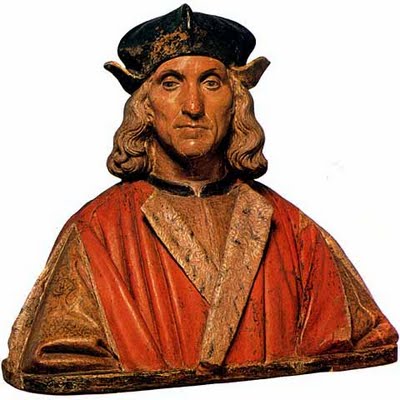
Henry VII - warrior, businessman, miser.

Henry VIII. Egotist, reformer, serial monogamist (mostly).
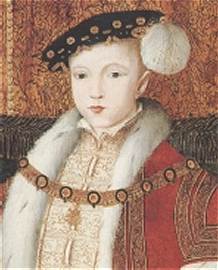
Edward VI, who ruled from the age of 9 until 15.
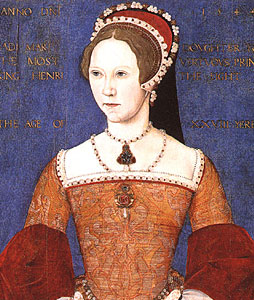
Mary I ruled from the age of 37 to 42.
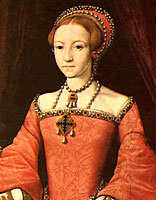
Elizabeth I ruled from the age of 25 to 69.
And that is where the Tudor Dynasty ends. But not our series! Next time we dive back into the founding mother and grandmother of this family!
Time Travel With The History Chicks
Honestly, we could list and list and list, and where to start? We thought a good idea might be to read some historical fiction to begin. Yes, it’s fabricated stories, but they might give you an image to hang facts on, give you colorful ideas about the times. Who do we like? So many to pick from…how about Phillipa Gregory?
Phillipa Gregory, The White Queen
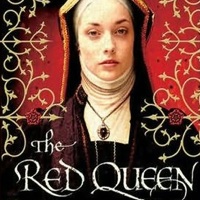
The Red Queen
Of course, we also like Non-fiction for this background study (of course we do!) Alison Weir!
The Princes in the Tower, Alison Weir
The War of the Roses, Alison Weir
For you visual learners, skip on over to Netflix and stream David Starkey’s: The Monarchy. If you only have a little time, and want to be topic specific watch Season One- Episode Six, then Season Two- Episode One.
Got kids? Or just like your information boiled down to the basics? Project Britain is a website jam packed with information.
And for a website with lots and lots of information (as well as daily Today in Tutor History tweets) The Tudor Tutor
by The History Chicks | Jan 26, 2012 | Podcasts