When we started this project we decided that a season would consist of ten full- length episodes, posted approximately two weeks apart, with an option of unlimited mini episodes to allow for spontaneity. We also decided that we would end the season with a series near and dear to our hearts. We thought this would give us some structure, and a goal, as well as the freedom to deviate if we wanted to chat a little bit about someone- or something- related to the subject of the full episode.
We had a plan. And, for the most part, we stuck to it. Marie Antoinette, Laura Ingalls Wilder, Cinderella Abigail Adams, Dolley Madison, Lizzie Borden, Helen Keller, The Mrs. Astor, Gilded Age Heiresses and Jennie Jerome Churchill. We supplemented those episodes with mini-conversations: Abigail Adams and Feminism, Books in the Little House Series, Little Red Riding Hood, Anne Sullivan Macy, The Age of Innocence movie, and Gilded Age Servants.
And we have big plans for next season as well. Oh yes, we do! But we will be taking a short break from posting full length episodes so we can get ready for that season. And have some summer fun with our families that does not include midnight editing and writing sessions, child care juggling to ensure quiet while recording, and rushing to bring back long overdue library books.
But, just as we had a plan for Season One, we have a plan for this hiatus and you will barely know we are gone. We will be putting out some postcard type entries when we stumble across (on purpose) things we know you might like. And we will be monitoring both our website, facebook page, google+ and twitter (although, we admit, we are not the best tweeters out there. We’ll own that and work on it).
This episode is a question and answer grab bag. We posted a call for questions which we answer in this episode, as well as some odds and ends we thought would be fun. We tell you a bit about National Novel Writing Month, about how we met, how we worked, and some other questions that listeners asked us. First off here is the link to NaNoWriMo- http://www.nanowrimo.org/. (Which has nothing to do with history except our own.)
Here is our solemn vow ( in print!): When we hit 1000 likes on facebook we will have a Tudors series.
Listen to the podcast for more info…but we know how much you like your visuals. And we get asked this question A LOT:
What do you look like?
Can’t we show you where we record instead, it’s so much more interesting…
This is where we sit when we talk. It might explain a lot.
Ok…we snapped some pics and this is our favorite image of us. Totally shows you who we are and what we look like:
Beckett wore cute shoes that day, Susan went for comfort. Actually, Beckett always wears cute shoes and Susan always goes for comfort. And we have the same size feet. True.
Oh! You want to know what our FACES look like! Got it…
Susan- action shot.
Yeah, we could do this all day.
Thank you for your encouragement,and emails and notes to us! Thank you for telling us who you would like to hear us discuss, and thank you for telling us where you listen to us. Thank you for clicking our stylish DONATE button, and for writing such wonderful reviews for us on iTunes. Thank you for listening! We are having a wonderful time and are very excited to come back to you very soon with Season Two!
Peace!
Beckett and Susan
I should have used my "fairy pixie" shot. Maybe next season... Beckett
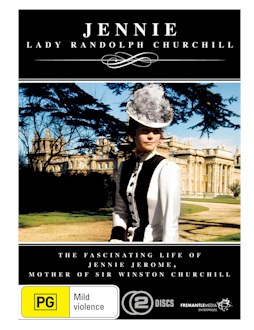
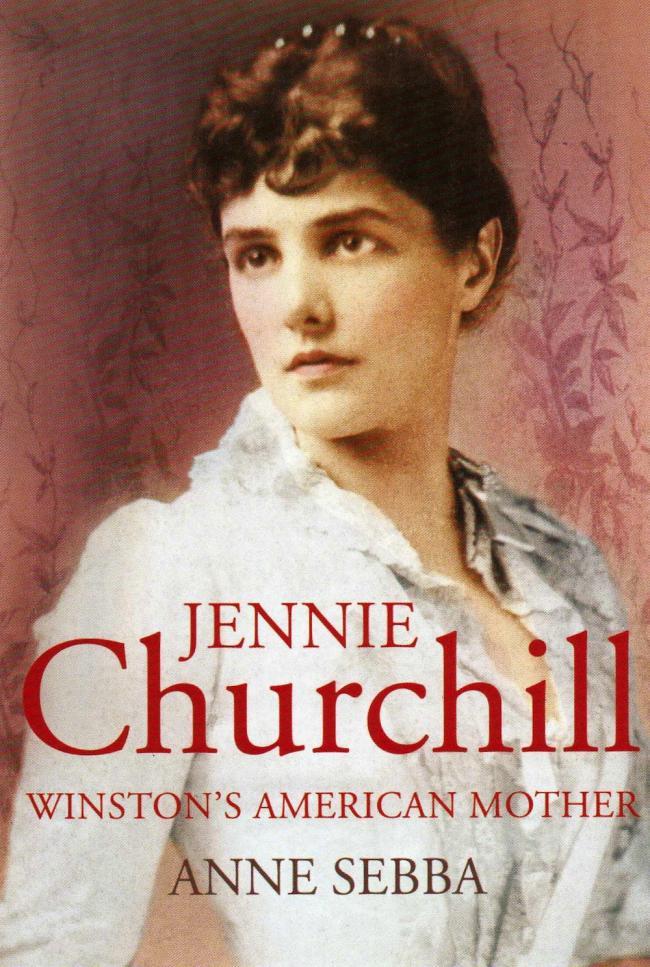
We wrap up our Gilded Age series with a lively discussion about one of the first wave of Gilded Age Heiresses- an American born woman who gave birth to a son who would eventually be known as one of the greatest Britons in history.
Jennie Jerome Churchill.
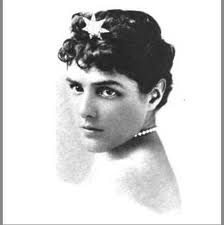
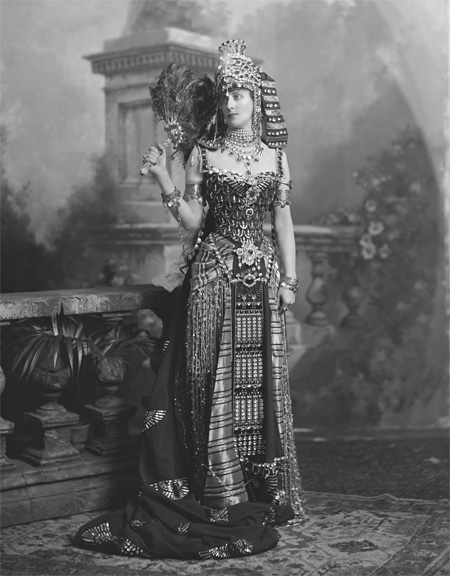
A young and captivating Jennie Jerome Churchill
Yes, we talked about her already. But we only gave a thin sketch of her life as a Dollar Princess- we never got to the really juicy parts! We promised you an episode on Jennie Jerome Churchill, and by golly, we are History Chicks of our word!
Jeannette Jerome was born in 1854 into a family with a father who was very good at making money, and also good at losing it…and making it again. Jennie and her three sisters were raised in a fairly wealthy home in Brooklyn, spent summers in Newport, and- when Mama had had enough of watching her husband dally around- lived in Paris.
While there, Empress Eugenie took a shine to the Jerome girls and Parisian life suited them all just fine until war broke out and Clara hustled those girls out of Paris to England. The beautiful Jerome girls quickly assimilated into English society, and when Jennie befriended Edward, the Prince of Wales- life really started to get interesting!
In 1873, a 19 year-old Jennie Jerome had a three-day romance that ended with a proposal from Lord Randolph-Spencer Churchill, the second son of the 7th Duke of Marlborough. She officially became Lady Churchill.
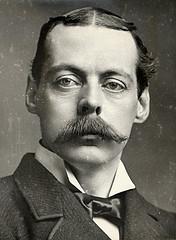
Lord Randolph Spencer Churchill. Think what you will.
We discussed the hoops the couple had to jump through before marriage when we talked Gilded Age Heiresses and the birth of her first son, Winston but there was a second son born to Jennie and enveloped in scandal as a great deal of this woman’s life is–the family was even exiled to *sarcastic gasp* Ireland!
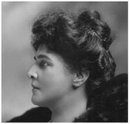
She also possessed a remarkable resemblance to another famous Lady……ok, maybe it’s just us.
When Randolph passed away at age 45 (syphilis…of course it was syphilis) Jennie took up a couple projects, really modern things like starting a magazine and flipping houses—but her biggest success came when she finally turned her attention to her son Winston and his political career and, we all know how that worked out for Winston. (And if you don’t…google…come on, you need to know this one.)
Winston Churchill (not W.C Fields)
Jennie isn’t one to be alone, there were two more marriages (the last one to a man 23 years younger than she…go, Jennie!) At the age of 67, in a very dramatic way, she falls down a set of stairs and amputation is required, gangrene develops and she passed away.
Not everyone in the Gilded Age had a wardrobe of Worth dresses and the luxury of boredom; an army of servants were required behind the scenes to ensure the Dollar Princesses’ success. The heiresses met this strict British hierarchy with varying degrees of competence.
Consuelo Vanderbilt, who was once described as “barely allowed to move her own hairbrushes” at home, was given full control over 40 indoor servants upon her marriage to the Duke of Marlborough. Though given no real guidance from her husband, she soon learned that inertia was the best policy. Even her attempts to add more staff to relieve what she saw as the housemaids’ overwork was met with resistance – as was her request to add running water to their quarters!
Six housemaids were seen as quite enough, thank you very much…(This is the same palace that employed one man to wash all of these windows – and it took him a full year!)
Lady Troubridge’s “The Book of Etiquette” (1926) sets forth the ideal attitude for the upper classes in dealing with their servants, as follows: (Let’s hope the theory was also put into practice!)
‘It would appear that there are people who feel that those who labour in the capacity of servants are inferior, but in most cases it is those who place servants on a lower plane who are themselves inferior. We owe to those who take part in the work…more than the wages we pay them: we owe them gratitude, courtesy and kindness. They, equally, should treat their employers with courtesy and kindness, and they should regard it as beneath their self-respect to ask wages for work which they are not fitted to perform. A reliable servant holds a place of importance in the home, and it should be recognised in the social world as a place worthy of courtesy and respect.’
-I discussed briefly the most common indoor servants of the time:
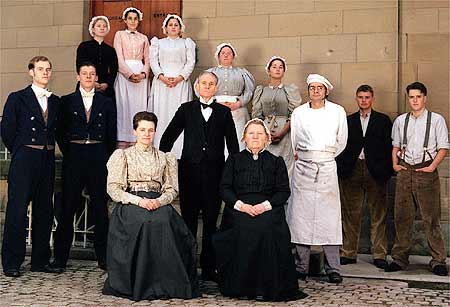
And a true obsession of mine, the wonderful, amazing “Manor House” series, in which modern people were cast as Edwardian servants and aristocracy:
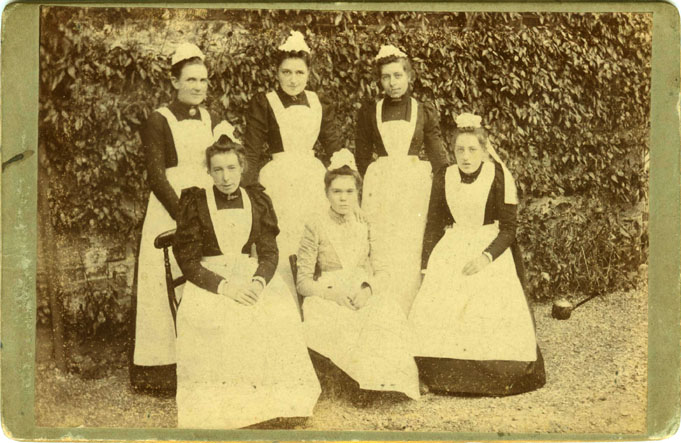
Looks like any classic servant portrait of the day. Note the upper servants are definitely given pride of place in the lineup.
The show’s website is a must – so many things to see, including the daily schedules for each “servant” or “family member.” – and their rules of conduct.
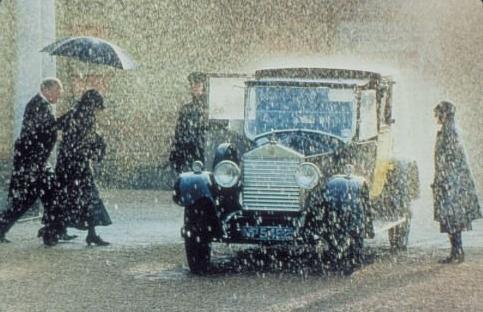
I mentioned the Robert Altman film “Gosford Park”, which (as it’s set in 1932) is well out of our period, but has great insight into the world of the country house servant. In particular, I love all of the “offices” in the basement, all the languor of the upstairs people while all chaos breaks downstairs.
Notice the lady’s maid and driver standing in the rain? They were not allowed to get into the car until the Countess did.
Here is the link to a wonderful article from Harper’s Bazaar in 1904, decribing (and showing!) the atypically luxurious accommodations for servants in that house.
Call them whatever you want; Gilded Age Heiresses, Dollar Princesses, Buccaneers– they all point to the same type of woman. Spanning about a twenty year time period wealthy American ladies of marrying age headed across the pond to snag the ultimate in opulent accessories: a noble title.
In this episode, the third part of our Gilded Age series, we sit down to a chat about several of these women. If you have yet to listen to the Mrs Astor podcast, you might want to take some time to do that now. We do reference several people discussed in that episode.
During the last part of the 1800s the British economy was drifting from agriculturally-based to more industrial. The funds nobility required to maintain not only their magnificent homes, but their lifestyle, was diminishing.
On the other side of the Atlantic, a group of American Mamas and Daughters have stalled socially. They could not enter the next tier of society and felt the best option to propel them into that social level was to have a title in the family. Not short of cash, and having well educated and adventurous daughters, they headed to England. Awaiting them was Edward VII, Prince of Wales who had a very soft spot in his heart for these charming young women.
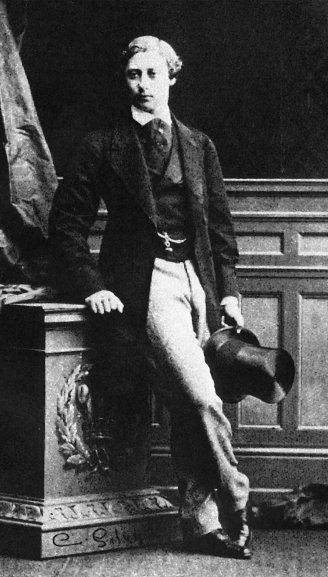
A young (and thin) Prince of Wales
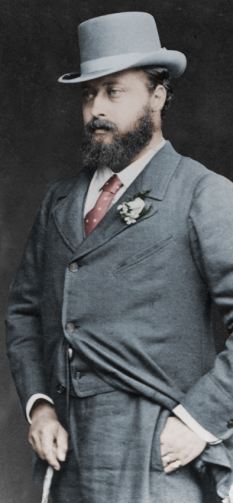
Edward VII, once he hit his stride
One of the first women to become titled was Brooklyn-born Jennie Jerome Churchill.
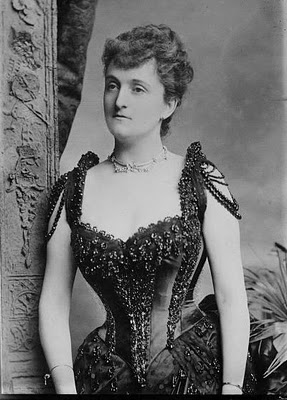
Jennie Jerome Churchill
In 1873, a 19 yr old Jennie meets Lord Randolph Spencer-Churchill, Second son (and therefore NOT the title-inheritor!) of the 7th Duke of Marlborough.
Quick, scandalous proposal. Slower engagement. Some hoops had to be jumped through by the couple, and finally the Prince of Wales got involved. Jennie married at the British Embassy in Paris the following spring and became Lady Churchill… and seven months later she gave birth to a full term son…and named him Winston.
He was a lot cuter as a kid.
Lady Randolph and her sons Winston and John
We talked a bit about the Minnie Stevens and her mother. Minnie, soon to be Lady Paget, that is.
Next up in our discussion is Consuelo Yznaga.
Consuelo Ygnaza showing off her tiny waist
She landed her title as Duchess of Manchester when she married Viscount Mandeville in 1876. This union really got things hopping in NYC after Consuelo’s childhood friend Alva Vanderbilt threw a ball in her honor. (Seriously, if you don’t know who Alva is or what happened at that ball, you simply MUST listen to the Mrs Astor podcast!) Alva was also inspired to get a title for her one and only daughter whom she had named after her childhood friend…Consuelo. (Yes, same one. How many Consuelos can there be in this story?)
Mom. Alva Vanderbilt.( Of course we found the most stern pic of her possible!)
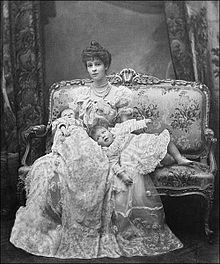
Sweet Consuelo
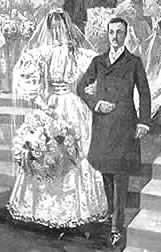
Consuelo Vanderbilt was raised to become royalty. Alva saw to all her education, as well as overseeing the suitors who came sniffing around. Alva, wishing to draw attention away from the fact that she and Willliam K were divorcing, got things moving as only Alva could. Consuelo had, for a brief moment, developed a backbone and told Mommy Dearest that she was engaged to be married to someone Mom did not approve of. Alva manipulated that thought right out of her daughter’s head and in 1895 a tearful 18 year old Consuelo married of Charles Spencer- Churchill, the 9th Duke of Marlborough, becoming a Duchess.
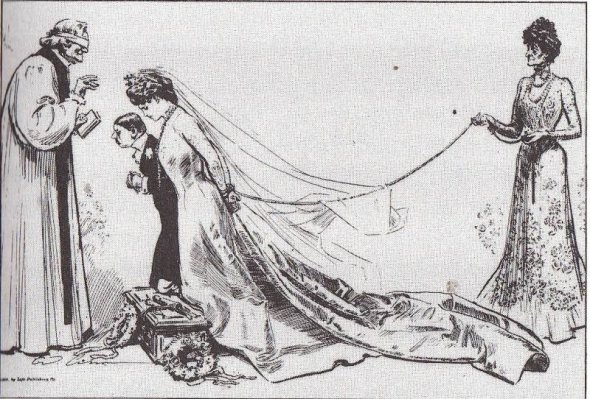
Satirical cartoon by Charles Dana Gibson. Whoever could that be? (Note the couple kneeling at Cupid’s Coffin)
She gave him not only a hefty dowry, but also two boys in rapid succession. She gave us the clever phrase,” an heir and a spare”.
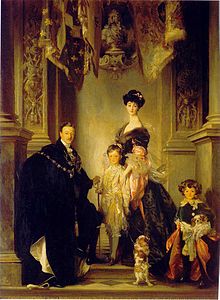
The fam. Note how the artist, Singer Sargent, posed Consuelo to appear as if she were standing on stairs to give her a reason for being taller than the Duke.
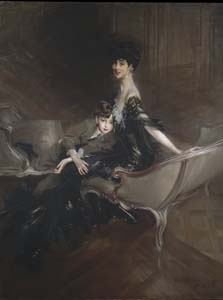
We love the look on her face here and the comfort of her son. By Giovanni Boldini
She also, eventually, left him, spent a good deal of her life in philanthropic work, and had the marriage annulled. She went on to have a great life when she married the dashing Jacques Balsan.
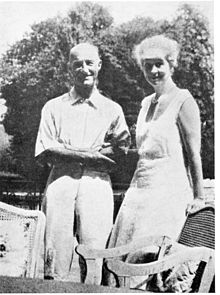
Jacques and Consuelo..happily ever after.
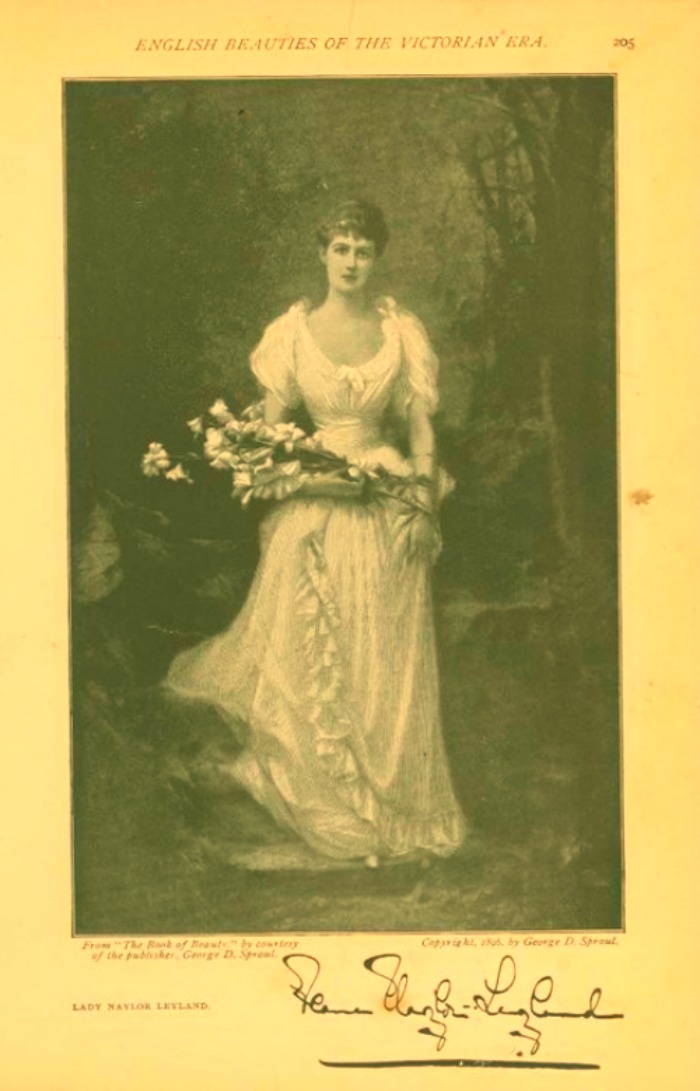
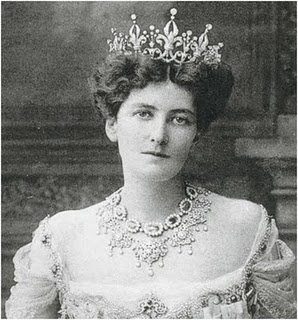
Some of the stories of these ladies just need to be heard. Like that of Jennie Chamberlain, of Ohio who became Lady Naylor-Leyland.
It’s Jennie Chamberlain…from Ohio!
One of the heiresses who really caught our attention was Mary Leiter who fell deeply in love with George Curzon, a young and politically ambitious member of Parliament. Eventually they wed, and after many years he fell in love with her at last. They moved to India and she became Vicereine of India. They lived a rather extraordinary life.
Mary Leiter
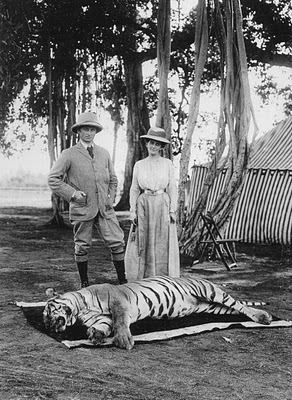
Lord and Lady Curzon of India ( Pre PETA days)
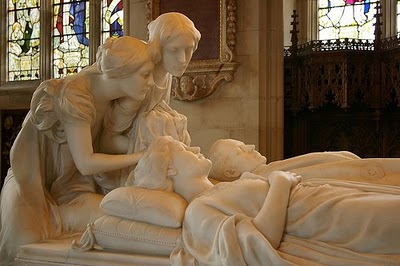
Tomb of George and Mary Curzon
Time Travel With The History Chicks
The only place we are going to send you with this topic is your favorite bookstore or library.
We only touched on the lives of a few women in this podcast, there are a couple hundred and some change to explore and the book that does it best? To Marry An English Lord, by Gail MacColl and Carol McD Wallace. We LOOOOOOVE this book. This is Beckett’s copy. You really should get your own.
So loved it’s become real!
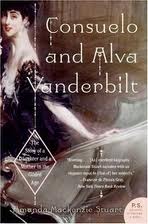
Another book we both enjoyed was Consuelo and Alva Vanderbilt: The Story of a Daughter and Mother in the Gilded Age, by Amanda MacKenzie Stuart.
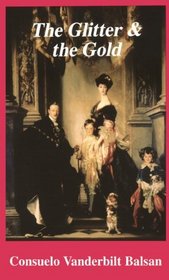
Since you are on a Consuelo bender, check out her book, The Glitter and the Gold.
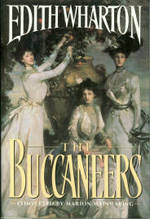
Finally, after you get good and educated on all of these women of the Gilded Age, get your hands on Edith Wharton’s The Buccaneers. Wharton died before the book was finished, but 50 years later, a Wharton scholar named Marion Mainwaring finished the tale of three American women who marry British Nobility. ( Or you could watch the 1995 BBC miniseries,which is available on dvd).
The Buccaneers, by Edith Wharton
As always, music for our podcast comes courtesy of Music Alley. Visit them at music.mevio.com.